
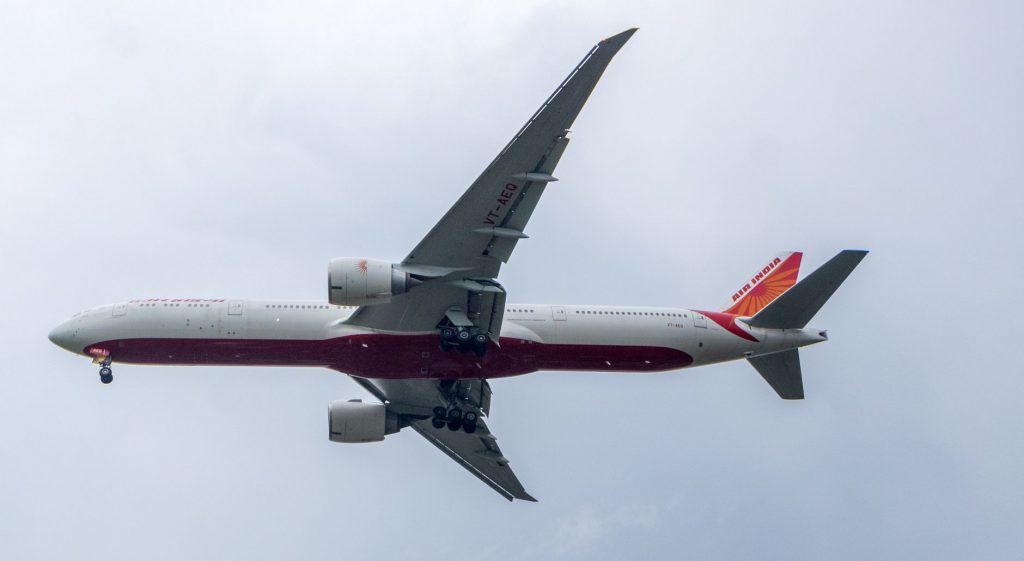
Imagine you’re on a flight heading to your dream vacation in Bangkok, but unbeknownst to you, your flight enters a different country’s airspace. Sounds impossible? But that’s exactly what happened with an Air India flight from New Delhi to Sharjah on June 17. The flight, which was supposed to fly over Indian airspace, briefly entered Pakistani airspace near Amritsar, leaving passengers shocked and raising serious concerns about air safety.
The incident occurred at around 3 am when the flight was making its descent into Sharjah International Airport. However, due to an apparent navigation error, the pilot veered off course and entered Pakistan’s airspace, sparking panic among passengers. Fortunately, the flight was able to regain its original course and land safely in Sharjah.
Pilot Put on Leave, Probe Ordered
An investigation has been launched into the incident, with the Directorate General of Civil Aviation (DGCA) taking a serious view of the matter. The pilot of the flight has been put on leave pending the outcome of the probe, which will determine the exact cause of the navigation error. This is a standard procedure followed by the DGCA in such cases.
The incident has raised concerns about air safety and the need for strict adherence to protocols. ‘This is a very serious matter, and we are taking it very seriously,’ said a DGCA spokesperson. ‘We will leave no stone unturned to identify the cause of the incident and take necessary action.’
Expert Context: Why This Matters
Experts say that navigation errors can be caused by a variety of factors, including human error, equipment failure, or even a combination of both. ‘This incident highlights the importance of having robust safety protocols in place,’ said Captain Suresh, a veteran pilot. ‘The DGCA must ensure that all airlines adhere to strict safety standards and take necessary corrective action in case of any deviation.’
The incident also raises questions about the preparedness of Indian airlines to deal with such situations. With Indian airspace becoming increasingly busy, the need for strict safety protocols has never been more pressing. The DGCA must take a zero-tolerance approach to any deviation from safety standards and ensure that passengers are protected at all costs.
In conclusion, the Air India flight incident is a wake-up call for Indian airlines and the DGCA. It’s a reminder that air safety is a serious matter that requires the utmost attention and vigilance. As we move forward, we hope that airlines and regulators will take necessary steps to prevent such incidents from happening in the future.