
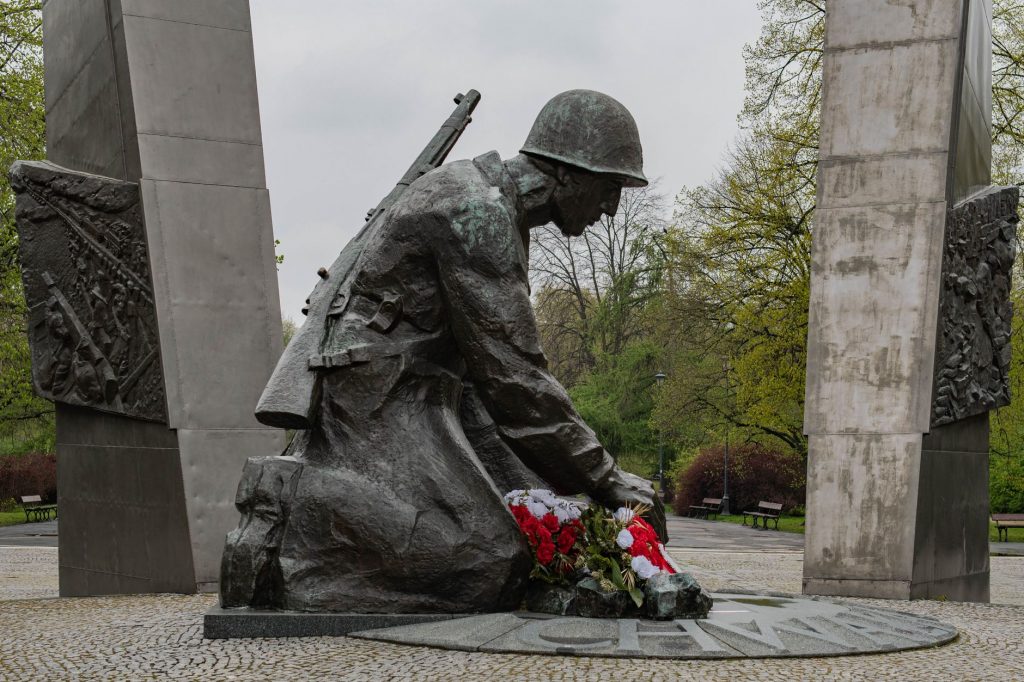
A Dark Chapter in Poland’s History
Thousands of innocent civilians were brutally killed by Ukrainian nationalists during the tumultuous years of World War Two. The horrific massacres took place in various parts of Poland, leaving behind a trail of devastation and a legacy of pain that still haunts the nation today. The victims were mostly Polish civilians, including women, children, and the elderly, who were brutally slaughtered by the Ukrainian Insurgent Army (UPA). The scale of the violence was staggering, with estimates suggesting that over 20,000 people lost their lives in these brutal attacks.
A Source of Tension Between Poland and Ukraine
The massacres have been a source of tension between Poland and Ukraine for decades, with each country having a vastly different account of the events. Ukraine has consistently denied any wrongdoing, while Poland has accused Ukrainian nationalists of perpetrating one of the deadliest genocides of the 20th century. The controversy has led to a long-standing feud between the two nations, with Poland refusing to recognize Ukraine’s version of history. The recent pledge by Polish Prime Minister Mateusz Morawiecki to build a memorial to the victims is seen as a significant step towards healing the wounds of the past.
The memorial will be built in the town of Volhynia, where the majority of the massacres took place. The project is expected to cost millions of dollars and will be a fitting tribute to the victims and their families. The move has been welcomed by many in Poland, who see it as a long-overdue recognition of the atrocities committed during World War Two. However, some have raised concerns about the potential backlash from Ukraine, which may view the memorial as a provocation.
The memorial will serve as a poignant reminder of the devastating consequences of nationalism and hatred. It will also provide a platform for the families of the victims to share their stories and experiences, ensuring that the sacrifices of their loved ones are never forgotten. As Poland continues to navigate its complex relationship with Ukraine, the memorial will serve as a powerful symbol of the nation’s commitment to truth, justice, and reconciliation.
What’s Next for Poland and Ukraine?
The memorial will undoubtedly be a contentious issue in Poland-Ukraine relations for the foreseeable future. While it may help to ease tensions in the short term, it is unlikely to resolve the deep-seated historical grievances that have driven the two nations apart for so long. In the aftermath of the memorial’s construction, Poland and Ukraine will need to work towards a more nuanced understanding of their shared history, one that acknowledges the complexities and nuances of the past. Only then can the two nations begin to build a more positive and cooperative relationship, one that is based on mutual respect and a shared commitment to the truth.