
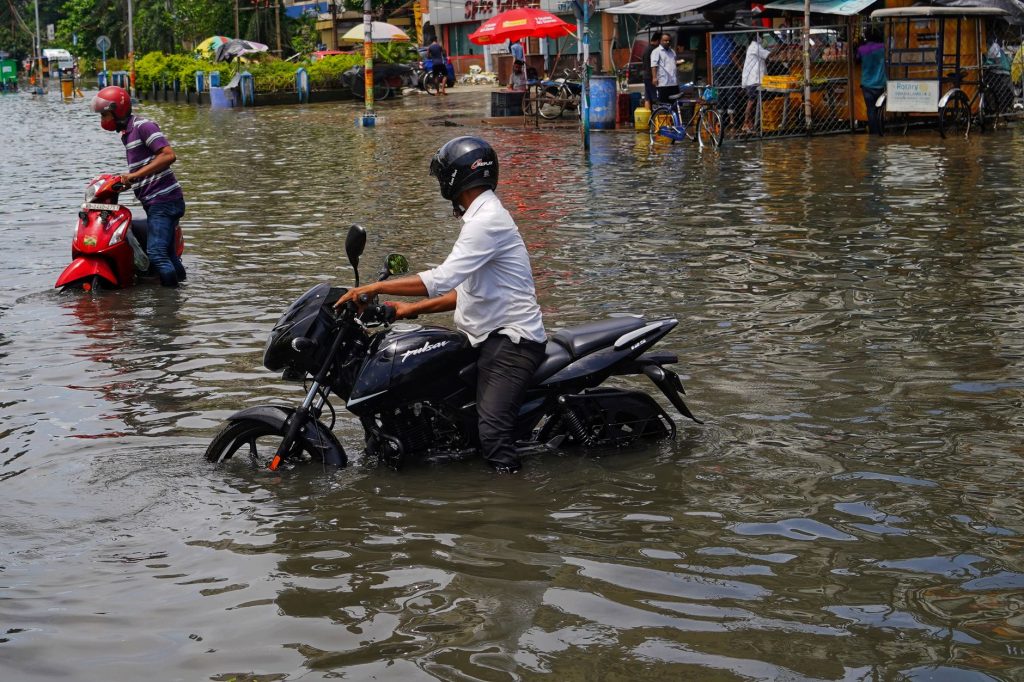
The sudden and torrential downpour in Guwahati has left the city paralysed with thousands of commuters stuck in massive traffic jams.
The situation turned dire on the evening of
Backstory: Guwahati’s Flood Prone
Guwahati, the capital city of Assam, has been plagued by floods for decades, with its proximity to the Brahmaputra River making it a high-risk zone for natural disasters.
However, the city’s drainage system has faced criticism for its inability to cope with heavy rainfall, leading to devastating floods every year.
Despite repeated warnings and promises of infrastructure upgrades, the city’s infrastructure remains woefully inadequate, leaving residents and commuters at the mercy of nature’s fury.
Current Situation: Chaos in Guwahati
The current floods in Guwahati have left thousands of people stranded, with many forced to abandon their cars and wade through waist-deep water to reach safety.
Emergency services are struggling to reach trapped residents, and the city’s healthcare system is under immense pressure as patients struggle to reach hospitals amidst the chaos.
The city’s business district, once bustling with activity, is now a deserted landscape of flooded streets and shuttered shops.
With the rain showing no signs of abating, the situation in Guwahati is set to worsen, leaving residents and authorities scrambling for solutions.
What It Means for Indians
The Guwahati floods are a stark reminder of the country’s vulnerability to natural disasters and the need for improved infrastructure and disaster preparedness.
As the climate continues to change, India must prioritize investment in its infrastructure and climate-resilient technologies to mitigate the impact of such disasters.
The Government of India must take immediate action to address the city’s drainage crisis, upgrade its infrastructure, and provide relief to affected residents.
Only then can we ensure that such tragedies are averted, and Indians can live without fear of being stranded in the midst of a natural disaster.