
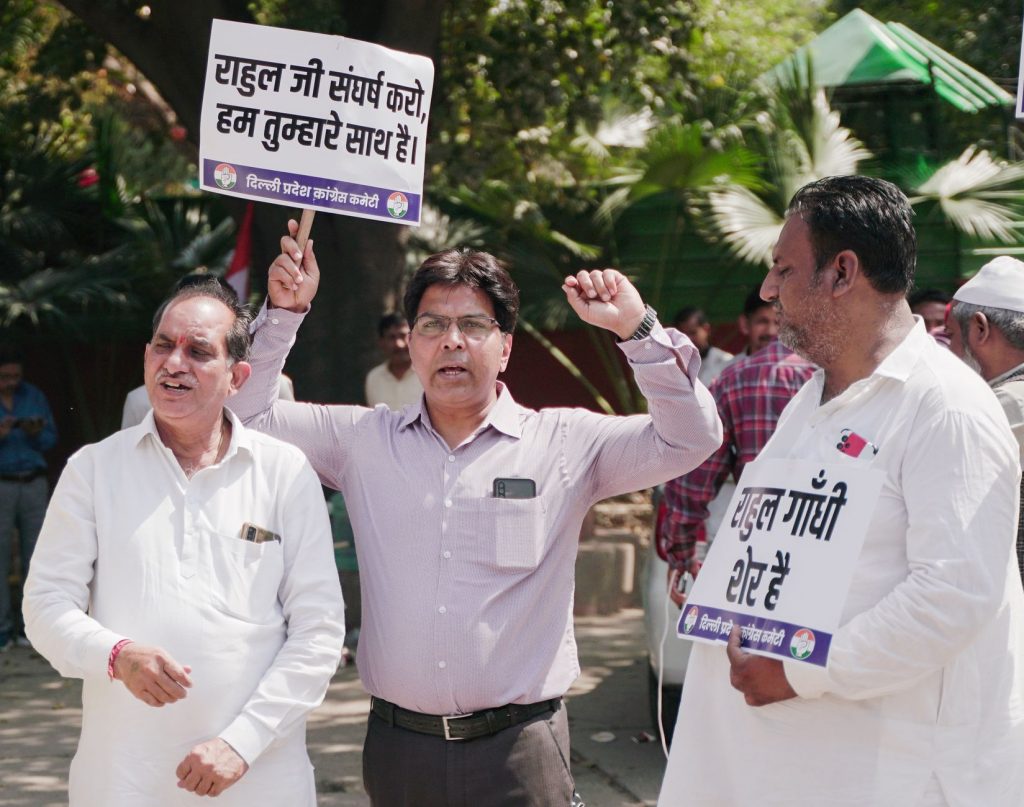
A tense standoff has unfolded at Delhi’s Jantar Mantar as supporters of the Citizens for Justice and Peace (CJP) gather in defiance of the government’s recent crackdown on dissent.
The protests, which began early morning, are a response to the government’s growing hostility towards civil society organizations, particularly those that challenge its policies and actions.
Key Demands of the CJP Protests
The CJP, a prominent Indian NGO, has been at the forefront of various campaigns to uphold the rights of marginalized communities and ensure accountability from government agencies.
At the heart of the current protests lies the government’s attempt to muzzle the CJP’s voice by blocking the WhatsApp account of its spokesperson.
The move has been widely criticized as an attack on the fundamental right to freedom of expression, which is enshrined in the Indian Constitution.
The CJP’s supporters, who include human rights activists, lawyers, and ordinary citizens, have gathered at Jantar Mantar to express their solidarity with the cause and to demand the government’s reversal of its decision.
Protesters are also voicing their concerns about the government’s alleged interference in the functioning of NGOs and its attempts to stifle dissent through coercive means.
As the protests continue to swell, the CJP has called upon the government to engage in a constructive dialogue to address the concerns of civil society organizations.
In a statement, the CJP’s spokesperson said that the government’s actions are a stark reminder of the dangers of authoritarianism and the importance of upholding democratic values.
The CJP has also sought the support of the international community, urging them to speak out against the Indian government’s actions and to promote the cause of human rights and democracy.
As the situation at Jantar Mantar remains tense, the future of the CJP protests hangs in the balance. Will the government yield to the demands of the protesters, or will it continue to push ahead with its agenda?
Background to the Protests
The CJP has been a thorn in the side of the Indian government for years, with its vocal campaigns against corruption, human rights abuses, and environmental degradation.
The organization has been at the forefront of several high-profile campaigns, including the fight against the National Register of Citizens (NRC) in Assam and the push for the passage of the Protection of Children from Sexual Offences (POCSO) Act.
In recent months, the CJP has faced increased scrutiny from the government, with several of its leaders being summoned for questioning by the authorities.
The blocking of the CJP’s spokesperson’s WhatsApp account is seen as the latest attempt by the government to silence the organization and its supporters.
The move has been widely condemned by civil society organizations and human rights groups, who see it as a clear attempt to stifle dissent and suppress the voices of marginalized communities.
What’s Next for the CJP Protests?
As the protests continue at Jantar Mantar, the CJP has called upon its supporters to remain vigilant and to continue to raise their voices against the government’s actions.
The organization has also announced plans to take the government to court over the blocking of its spokesperson’s WhatsApp account.
The case is expected to set a significant precedent for the future of free speech and expression in India, with the court’s decision likely to have far-reaching implications for civil society organizations and human rights activists.
As the situation at Jantar Mantar remains tense, one thing is clear: the CJP protests are a testament to the enduring power of civil society and the importance of upholding democratic values in the face of authoritarianism.