
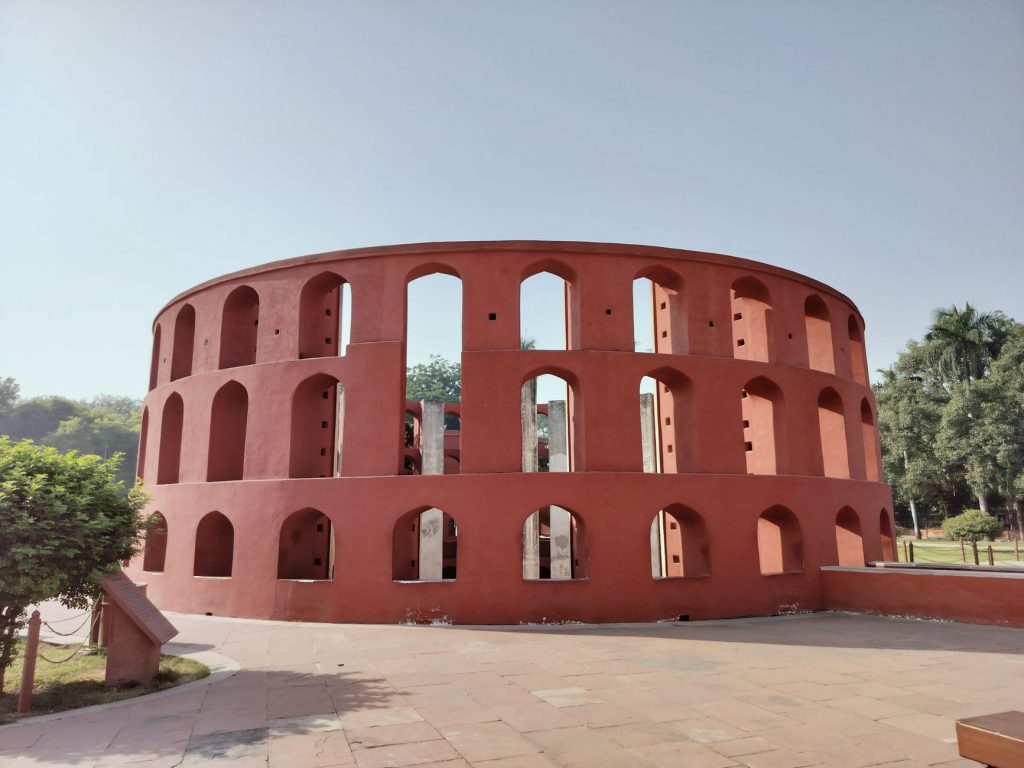
The Supreme Court has sought a response from the Centre on whether Jantar Mantar can be declared as a proper protest site in the national capital. This development comes after the Delhi High Court recently issued a notice to the Centre over a PIL challenging the decision to shift the protest site from Jantar Mantar to the nearby Nirankari Samagam Ground.
A bench of the Supreme Court comprising Justices MR Shah and BV Nagarathna issued the notice to the Centre while hearing a batch of petitions challenging the Delhi Police’s decision to shift protests from Jantar Mantar to Nirankari Samagam Ground. It is worth mentioning here that Jantar Mantar has been a hub for protests and demonstrations for over four decades.
Jantar Mantar: A Protester’s Hub for Decades
Jantar Mantar, also known as the Rashtrapati Bhavan’s Observatory, has been a symbol of India’s democratic spirit since the 1970s. The 17-acre sprawling area has been the site of numerous protests and demonstrations over the years, including those against the Emergency, the Mandal Commission, and even the CAA-NRC protests in 2020. Many consider Jantar Mantar as the epicenter of dissent in India.
However, in 2020, the Delhi Police decided to shift protests from Jantar Mantar to the nearby Nirankari Samagam Ground due to the COVID-19 pandemic. Despite the shift, many protesters continued to gather at Jantar Mantar, leading to clashes between the police and protesters on several occasions.
What Led to the Supreme Court’s Intervention?
The PIL filed by advocate Amit Sahni in the Delhi High Court challenged the Centre’s decision to shift protests from Jantar Mantar to Nirankari Samagam Ground. The petitioner argued that Jantar Mantar is a public space and cannot be restricted by the police without a valid reason. The court subsequently issued a notice to the Centre, seeking its response on the matter.
The Supreme Court’s intervention in the matter has sparked a debate among activists, lawyers, and citizens about the importance of public spaces for protests and demonstrations. Many feel that Jantar Mantar has become a sacred space for dissent in India and cannot be taken away by the authorities.
What’s Next?
The Centre has been given four weeks to respond to the Supreme Court’s notice. The court has also listed the matter for further hearing after four weeks. Meanwhile, activists and protesters are gearing up for a showdown with the authorities, as they plan to continue their protests at Jantar Mantar despite the Centre’s decision to shift them to Nirankari Samagam Ground.
The SC’s decision is expected to have far-reaching consequences for public spaces in India and the right to protest. As the country’s highest court weighs in on the matter, it remains to be seen whether Jantar Mantar will continue to be a hub for protests and demonstrations or if it will be declared as an improper protest site.