
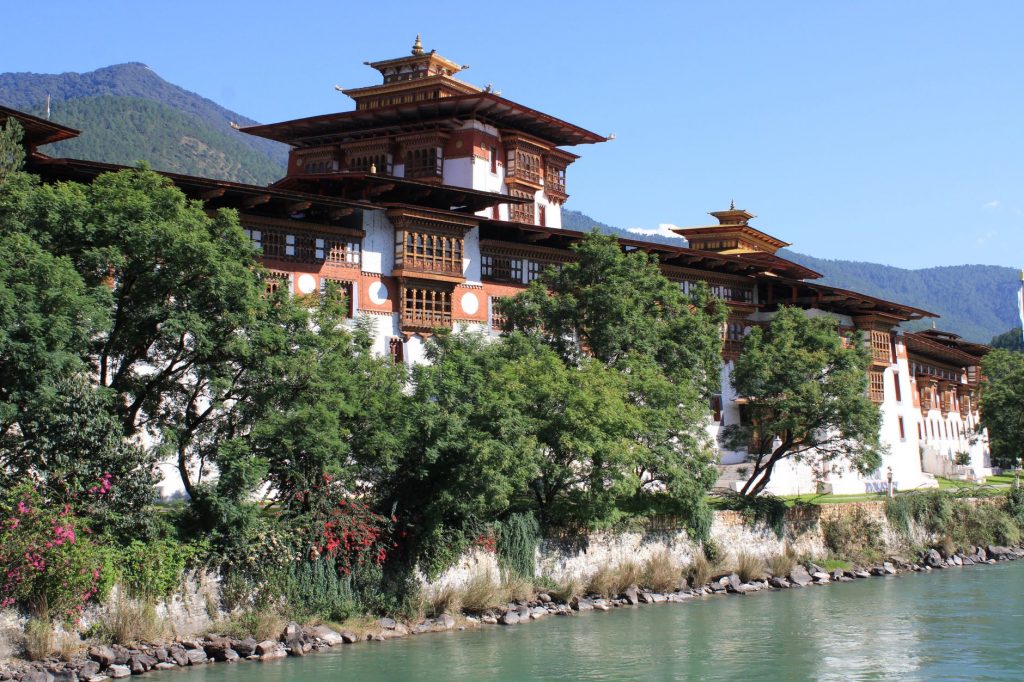
A crucial breakthrough in trans-border water management has been achieved by India and Bhutan, marking a significant step towards cooperation in the region.
Bilateral Talks Yield Fruitful Results
Recent high-level talks between the two nations have resulted in a comprehensive agreement to jointly manage a plethora of rivers that demarcate their shared border. The discussions, led by senior officials and diplomats from both sides, have focused on finding a mutually beneficial solution to the complex issues surrounding the management of these vital water sources.
The bilateral talks, held in the picturesque Himalayan kingdom of Bhutan, have been described as ‘productive’ by officials from both nations. The agreement reached during the talks is expected to pave the way for enhanced cooperation and a more harmonious relationship between the two countries in the realm of trans-border river management.
India and Bhutan share a 699-kilometer-long border, which is largely marked by a series of rivers. The rivers in question are not only vital sources of water but also play a crucial role in shaping the ecology of the region. The agreement reached during the talks will have far-reaching implications for the two nations, as it aims to address issues such as water sharing, flood management, and the maintenance of healthy river ecosystems.
Commenting on the breakthrough, a senior government official from India stated that the agreement will help in ‘strengthening the trust and cooperation between the two nations.’ The official added that the pact will serve as a model for trans-border river management in the region, paving the way for enhanced cooperation among other nations sharing similar boundaries.
The agreement reached during the talks is the culmination of years of hard work and negotiations between officials from both nations. The talks were preceded by several rounds of discussions and negotiations, which were aimed at finding a solution to the complex issues surrounding the management of the shared rivers.
The agreement is seen as a significant step towards strengthening the bilateral relationship between India and Bhutan. The two nations have traditionally enjoyed a close and cordial relationship, and this breakthrough is expected to further enhance their cooperation in various spheres.
The shared rivers of India and Bhutan are not only vital sources of water but also play a crucial role in shaping the ecology of the region. The agreement reached during the talks will have far-reaching implications for the two nations, as it aims to address issues such as water sharing, flood management, and the maintenance of healthy river ecosystems.
What This Means for Indians
The agreement reached during the talks has significant implications for Indians, as it will help in strengthening the bilateral relationship between India and Bhutan. The pact will serve as a model for trans-border river management in the region, paving the way for enhanced cooperation among other nations sharing similar boundaries.
The agreement will also have a positive impact on the environment, as it aims to address issues such as water sharing, flood management, and the maintenance of healthy river ecosystems. This will help in ensuring the long-term sustainability of the shared rivers and promoting a healthy and stable ecosystem in the region.
Furthermore, the agreement will help in promoting economic growth and development in the region. The shared rivers are a vital source of water for irrigation, industry, and drinking purposes, and the agreement will ensure that both nations have access to this vital resource.
In conclusion, the agreement reached during the talks between India and Bhutan is a significant breakthrough in trans-border water management. The pact will serve as a model for trans-border river management in the region, paving the way for enhanced cooperation among other nations sharing similar boundaries. The agreement will have far-reaching implications for the two nations, promoting a healthy and stable ecosystem, economic growth, and development in the region.