
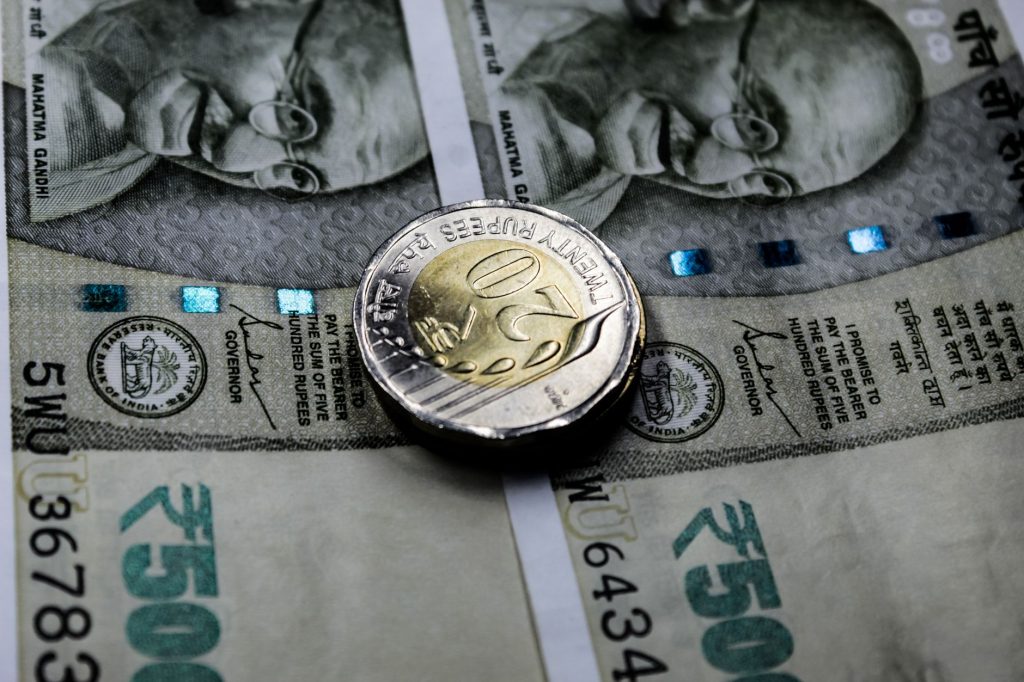
India’s Currency on the Radar
A French bank’s India treasurer has sent shockwaves through the currency markets by predicting the rupee will find a floor near its ‘fair value’ of 96 per US dollar.
This forecast comes at a critical time for India’s economy, which has been grappling with high inflation and a widening current account deficit. The rupee has been sliding against the US dollar, causing concern among policymakers and investors.
The treasurer’s comments are a stark reminder of the global economic pressures that India faces. The country’s economy has been hit hard by the ongoing Russia-Ukraine conflict, which has led to a spike in oil prices and a sharp depreciation of the rupee.
According to experts, a floor near 96 per dollar would mean that the rupee has found a level where it is unlikely to depreciate further. This would be a welcome relief for Indian businesses, which have been struggling with high import costs due to the weak rupee.
However, not everyone is convinced that the rupee will find a floor at 96 per dollar. Some economists argue that the rupee’s value is still highly dependent on global factors, such as the US Federal Reserve’s monetary policy decisions.
Meanwhile, the Indian government has been taking steps to shore up the rupee, including imposing a 10% tax on non-essential imports. However, experts say that more needs to be done to address the underlying economic issues driving the rupee’s decline.
The Way Forward
So, what does the future hold for the rupee? While the treasurer’s prediction is a positive sign, it is still too early to say whether the rupee will indeed find a floor at 96 per dollar.
What is clear, however, is that the Indian economy needs a boost. With inflation running high and the current account deficit widening, policymakers will need to take bold steps to stimulate growth and stabilize the currency.
One possible solution is to implement economic reforms to boost investor confidence and attract foreign capital. This could include measures such as liberalizing the FDI regime, easing business regulations, and improving the tax environment.
Ultimately, the fate of the rupee will depend on a combination of domestic and global factors. While the treasurer’s prediction is a welcome sign, it is still too early to say whether the rupee will find a floor at 96 per dollar.
Why it Matters
The fate of the rupee matters because it has a direct impact on the Indian economy and the lives of millions of Indians.
A weak rupee means higher import costs, which can lead to inflation and a decline in living standards. It also means that Indian businesses will struggle to compete with foreign rivals, leading to job losses and economic stagnation.
On the other hand, a stable rupee will provide a much-needed boost to the Indian economy, leading to higher economic growth, lower inflation, and improved living standards.
So, what happens next? Only time will tell. But one thing is certain – the fate of the rupee will be closely watched by policymakers, investors, and Indians alike.