
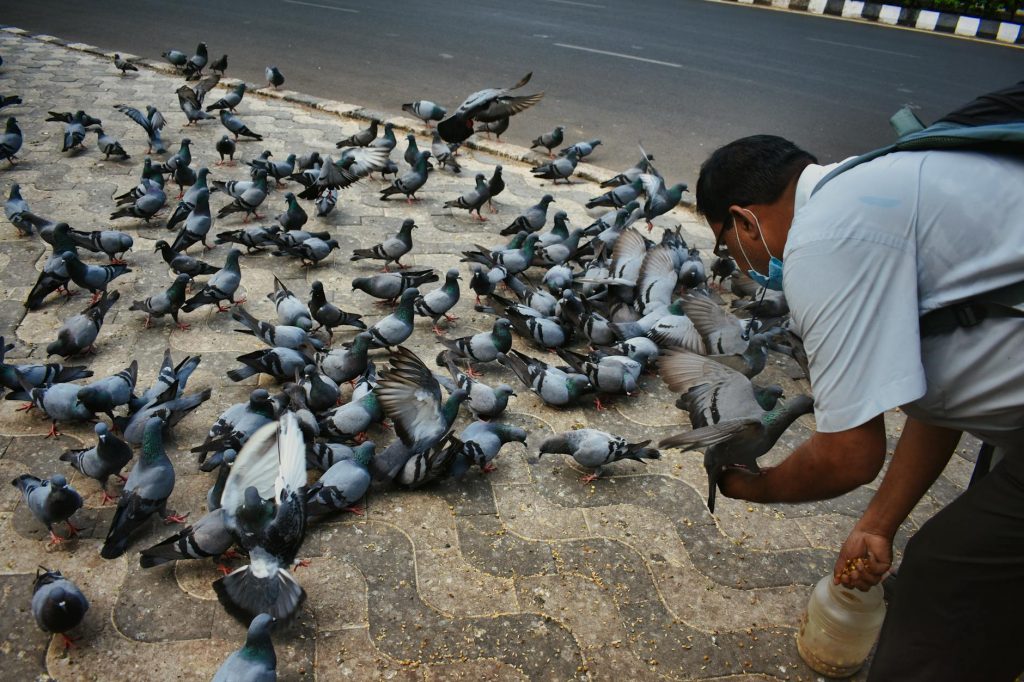
Karnataka is moving to regulate how people feed pigeons in public spaces, worried about respiratory illnesses spreading through bird droppings and dust.
The state government has flagged a real health concern here. When crowds gather to feed pigeons — especially in parks, temples, and busy markets — the birds leave behind droppings that can carry bacteria and fungi. When these dry out, they become airborne particles that people breathe in, potentially causing respiratory infections.
Why This Matters Now
Cities like Bengaluru, Mysuru, and Kochi have seen pigeon populations explode over the years. More birds mean more droppings, and that means more health risks, particularly for elderly people and children with weak immune systems. The government has decided enough is enough.
The regulations aren’t about banning pigeons entirely — they’re about controlling where and how people feed them. Expect restrictions on feeding in crowded areas, especially near schools, hospitals, and residential zones. Some cities might designate specific feeding zones away from high-traffic areas.
What Changes for You
If you’re someone who enjoys feeding birds, you’ll need to be more mindful about location and frequency. Parks and open spaces might have new rules posted. Violating these could mean fines — though the exact penalty amounts are still being finalized.
This also puts responsibility on civic authorities. They’ll need to step up cleaning in affected areas and manage the pigeon population better. Cities might bring in trained handlers or use humane deterrents to keep bird populations under control without harming them.
For apartment complexes and commercial spaces, this could mean stricter guidelines about bird management. Building management committees might need to take action if pigeon populations get out of hand on their premises.
The health angle here is serious. Pigeon droppings can carry histoplasmosis and cryptococcosis — diseases that affect your lungs. People working in outdoor spaces or living in areas with heavy pigeon activity are particularly vulnerable. This regulation is essentially trying to prevent a public health headache before it becomes a crisis.
The government is also pushing awareness campaigns to educate people about the risks. The idea is simple: people genuinely love feeding pigeons without realizing the consequences. Better awareness could go a long way.
Over the next few months, expect official circulars from civic bodies detailing exact rules, penalties, and designated feeding areas. The implementation phase will determine whether this actually works or remains a well-intentioned policy on paper.
This is happening at a time when cities are becoming more crowded and public health concerns are getting serious attention. If Karnataka pulls this off smoothly, expect other states to follow suit with their own pigeon management strategies.