
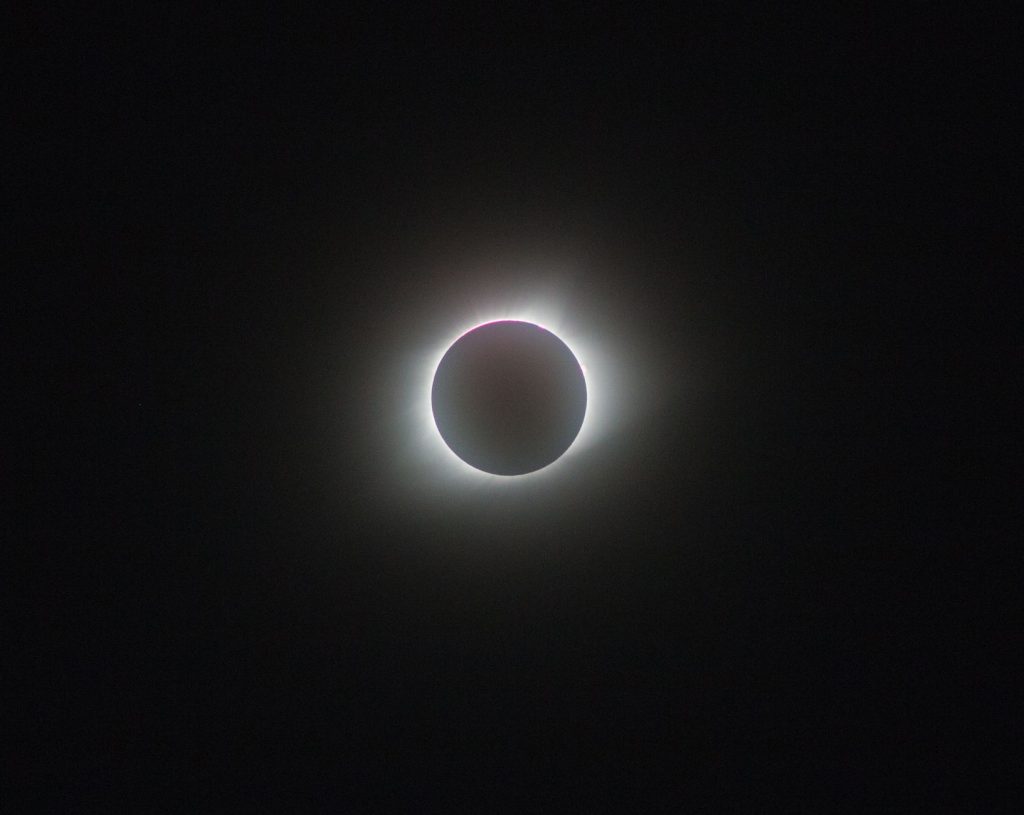
Imagine a moment when the sun, our constant companion, disappears for a few precious minutes, replaced by the dark silhouette of the moon. This incredible sight, a total solar eclipse, is about to sweep across Europe, drawing thousands to prime viewing spots from the icy landscapes of Iceland to the sunny shores of Spain. People have travelled far and wide, setting up telescopes and cameras, all eager to witness this rare cosmic dance.
What Exactly is Happening?
A total solar eclipse occurs when the Moon perfectly aligns between the Sun and the Earth, casting a shadow that completely blocks out the Sun’s bright face. For those lucky enough to be in the ‘path of totality’, the sky will darken as if it were twilight, and the Sun’s outer atmosphere, the corona, will become visible as a shimmering halo. This isn’t just any eclipse; it’s a grand event that nature puts on display only occasionally, making it a must-see for sky gazers and science enthusiasts alike.
A Journey Across Continents
This particular eclipse’s path is quite dramatic, beginning its journey over the Atlantic Ocean and then making landfall in Iceland. From there, it will cross over the Faroe Islands and Norway before sweeping across the northern tip of Scotland. The spectacle continues its march south-east, gracing parts of Denmark, Sweden, and Poland, before concluding its terrestrial journey over the Baltic Sea. Each location in this path offers a unique backdrop for this awe-inspiring event, from dramatic coastlines to historic cities.
Why It Matters to Us in India
While this total solar eclipse won’t be visible from India, it’s a powerful reminder of the grand scale of our universe and the incredible celestial events that unfold beyond our immediate sight. For Indians, it’s an opportunity to connect with the global fascination for astronomy and perhaps inspire the next generation of scientists and space explorers. Following such events from afar can fuel curiosity and encourage us to learn more about the cosmos, even if we can’t witness it firsthand. It also highlights the importance of scientific observation and international collaboration in understanding these natural phenomena.