
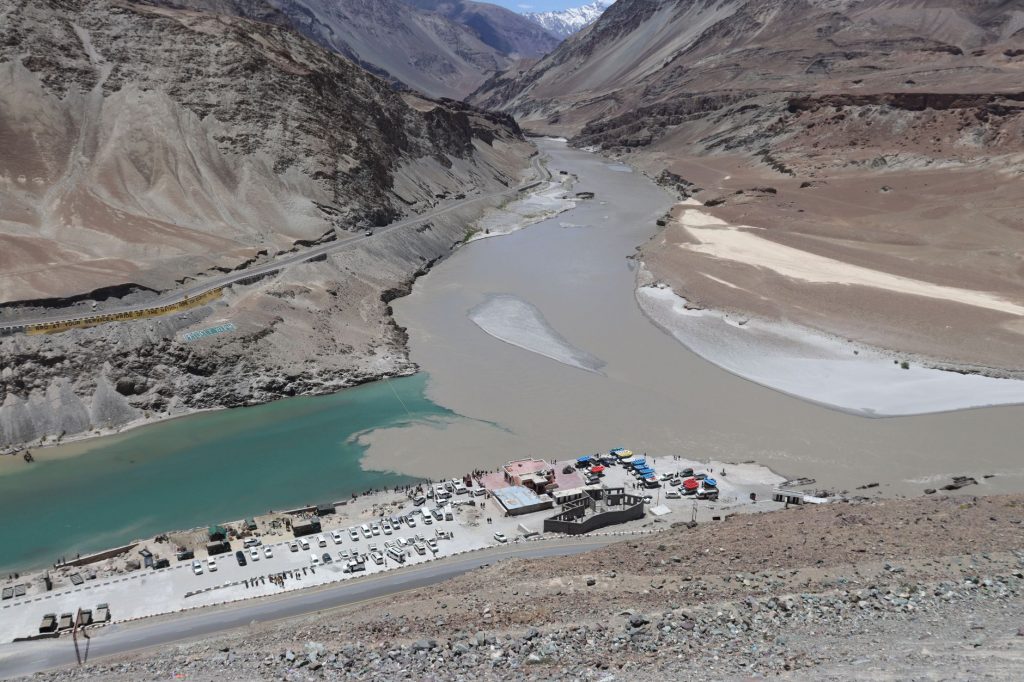
Imagine a family dispute over a shared well, where one sibling suddenly claims more water than agreed upon, citing a new assessment. This is, in essence, the situation India finds itself in concerning the Indus Waters Treaty (IWT) with Pakistan, a bedrock of bilateral relations for over six decades.
In a significant development that could ripple through diplomatic waters, the Indian government has officially declared the recent arbitration award related to the IWT as “illegal” and “unsustainable.” This strong stance comes after an international arbitration court, established under the treaty’s auspices, passed an award that New Delhi believes oversteps the treaty’s framework and potentially undermines India’s rights over its rivers.
A Contested Verdict
The arbitration, initiated by Pakistan, was ostensibly to address concerns over India’s hydroelectric projects on the western rivers – Chenab and Jhelum. However, India has consistently argued that the proceedings themselves were flawed. New Delhi maintains that the Permanent Court of Arbitration (PCA) acted beyond its mandate by attempting to arbitrate on issues that the treaty explicitly reserves for a Court of Arbitration. The government’s position is that the PCA’s award is a violation of the IWT’s provisions, particularly concerning the settlement of disputes.
India’s Stand: Upholding Treaty Principles
New Delhi’s assertion that the award is illegal stems from its interpretation of the IWT. India believes the treaty’s dispute resolution mechanism is clear, and the PCA has ventured into territory not permitted by the agreement. This move by the government signals a firm resolve to protect what it perceives as its sovereign rights and the sanctity of the treaty as it has been understood and implemented for decades. The government’s statement emphasizes its commitment to the IWT but insists that any resolution must adhere strictly to its established principles.
The implications of this declaration are far-reaching. While India has not outright rejected the treaty, its challenge to the arbitration award injects a new layer of complexity into the already sensitive relationship with Pakistan. Experts suggest this could lead to a period of diplomatic uncertainty, with both nations likely to engage in further discussions, potentially through different channels, to navigate this complex legal and political terrain. The focus now shifts to how this internal pronouncement will be communicated and managed on the international stage, and what subsequent steps, if any, will be taken by either country or the treaty’s oversight bodies.