
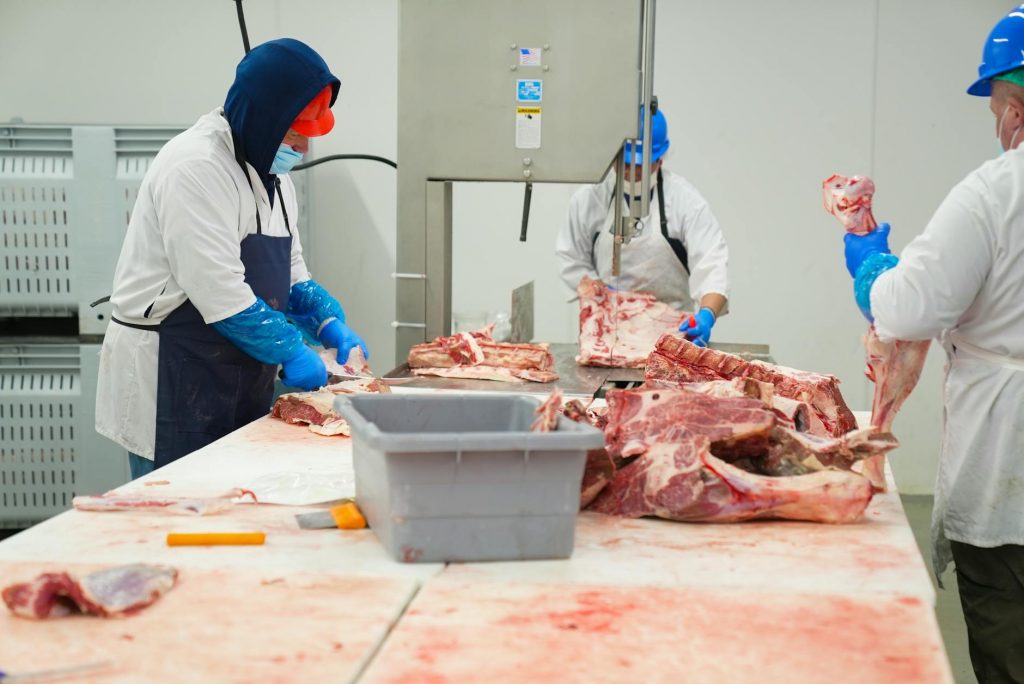
Imagine running a state government that’s built its political brand on protecting cows, then discovering a major slaughterhouse operating under your own administration’s watch. That’s the awkward position the BJP finds itself in across Madhya Pradesh right now.
A slaughterhouse licensed and operating under BJP-controlled municipal authorities has been found to be processing and supplying beef, creating an uncomfortable political moment for a party that has made cow protection central to its identity. The revelation has triggered criticism from within ruling circles and handed ammunition to opposition parties questioning the government’s commitment to its stated principles.
The Contradiction at the Centre
The issue exposes a gap between the BJP’s ideological stance and ground-level governance in the state. While the party has consistently championed stringent cattle protection laws and positioned itself as the guardian of bovine interests, the functioning of this slaughterhouse suggests administrative oversight or selective enforcement of these very policies.
Local officials are now scrambling to contain the damage. Some have blamed previous administrations for licensing decisions, though records indicate the facility continued operating under current BJP rule without intervention. Opposition parties have been quick to highlight what they call rank hypocrisy—using cow protection as a political tool while allowing commercial beef operations to flourish.
What This Means for Ground Politics
For the BJP, this becomes particularly tricky in Madhya Pradesh, a state where cattle-related politics cuts deep. The party has built substantial support among Hindu voters by championing cow protection laws and positioning itself as culturally aligned with traditional values. Incidents like this create cognitive dissonance that opposition parties will exploit relentlessly.
The controversy also reveals how municipal governance operates at multiple levels, sometimes independent of high-profile state-level politics. What happens in a local slaughterhouse licensing office often escapes the attention of chief ministers and their capitals—until it becomes a crisis.
Experts in Indian political communication suggest this type of contradiction particularly damages parties that have built strong ideological brands. When there’s daylight between stated values and administrative reality, voters question authenticity. The BJP will need to either tighten enforcement across the board or face accusations of selective governance based on political convenience.
The party has options: it can crack down on all such facilities, claim administrative failure and promise reforms, or argue that state laws permit licensed slaughter under specific conditions. Whatever it chooses, the optics have already created a problem that extends beyond one slaughterhouse into broader questions about governance consistency and political sincerity.