
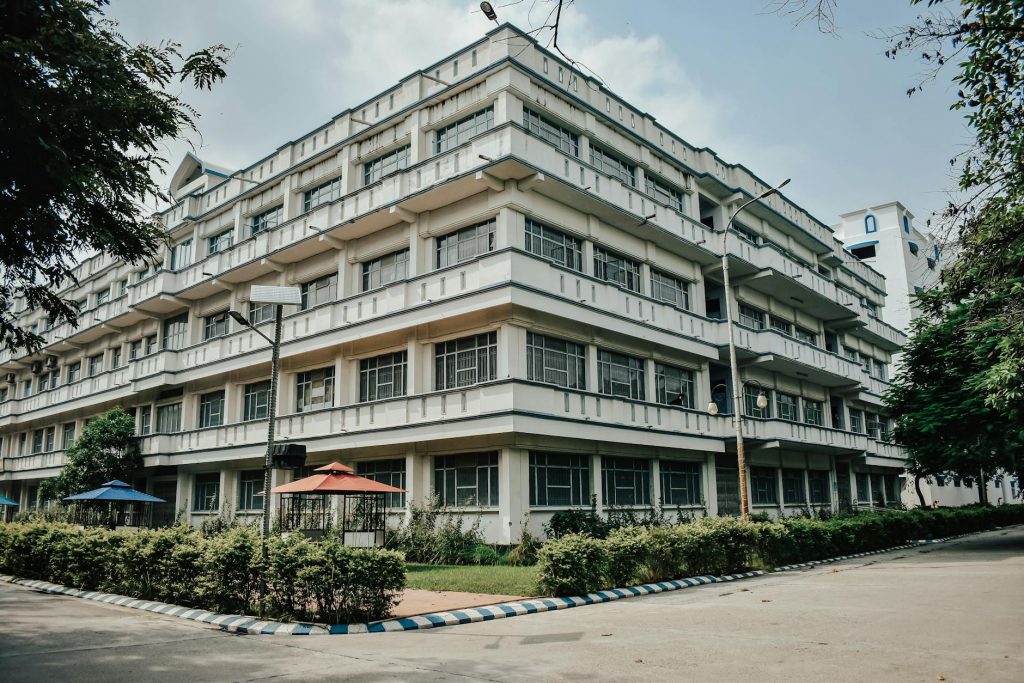
Picture a college campus where students are supposed to focus on exams and assignments. Instead, Lucknow University found itself at the centre of a charged religious and political standoff this week when student activists staged a dramatic counter-protest against namaz being offered on campus grounds.
Members of the Akhil Bharatiya Vidyarthi Parishad (ABVP), the student wing of the RSS, gathered at the university to chant the Hanuman Chalisa—a Hindu devotional text—in response to Muslim students performing namaz in public spaces. The protest wasn’t just symbolic. ABVP leaders demanded what they called “shuddhikaran,” a term that translates roughly to “purification,” of the campus.
What sparked the tension?
The flashpoint came after Muslim student groups began offering congregational prayers in open areas of the university campus. The ABVP interpreted this as a breach of secular campus norms and decided to stage a counter-demonstration to assert Hindu religious expression in the same spaces.
University authorities found themselves caught between competing claims about religious freedom and campus space usage. For Muslim students, offering namaz is a basic religious right protected under the Constitution. For ABVP activists, allowing this on campus grounds represented what they saw as a challenge to India’s secular character at an educational institution.
The “shuddhikaran” demand is particularly loaded. The term has historical resonance in Hindu nationalist circles, often implying a return to supposed “original” conditions or the removal of perceived “contaminants.”
Why this matters beyond campus walls
These university clashes have become a recurring pattern across India. What begins as a campus dispute often reflects deeper national tensions about how India’s secular framework accommodates religious expression from different communities.
Educational institutions are supposed to be spaces where students from diverse backgrounds study together. When protests over prayer spaces escalate, it raises real questions about whether universities can remain neutral ground—or if they inevitably become battlegrounds for larger political and religious conflicts.
Experts on communal relations point out that such incidents rarely resolve themselves at the local level. They tend to attract political attention, media spotlight, and hardened positions from all sides. Student bodies that should be debating curriculum or campus facilities instead find themselves mobilized along religious lines.
Lucknow University administration will need to navigate carefully. Setting clear, fair policies about campus prayer spaces that respect both religious freedom and institutional secular character won’t be easy. How the university handles this—and whether student leaders can dial back the temperature—will likely influence how other campuses approach similar situations.
As Indian universities grapple with these tensions, one thing is clear: without thoughtful institutional leadership and genuine dialogue between student groups, college campuses risk becoming mirrors of society’s deepest divides rather than spaces that bridge them.