
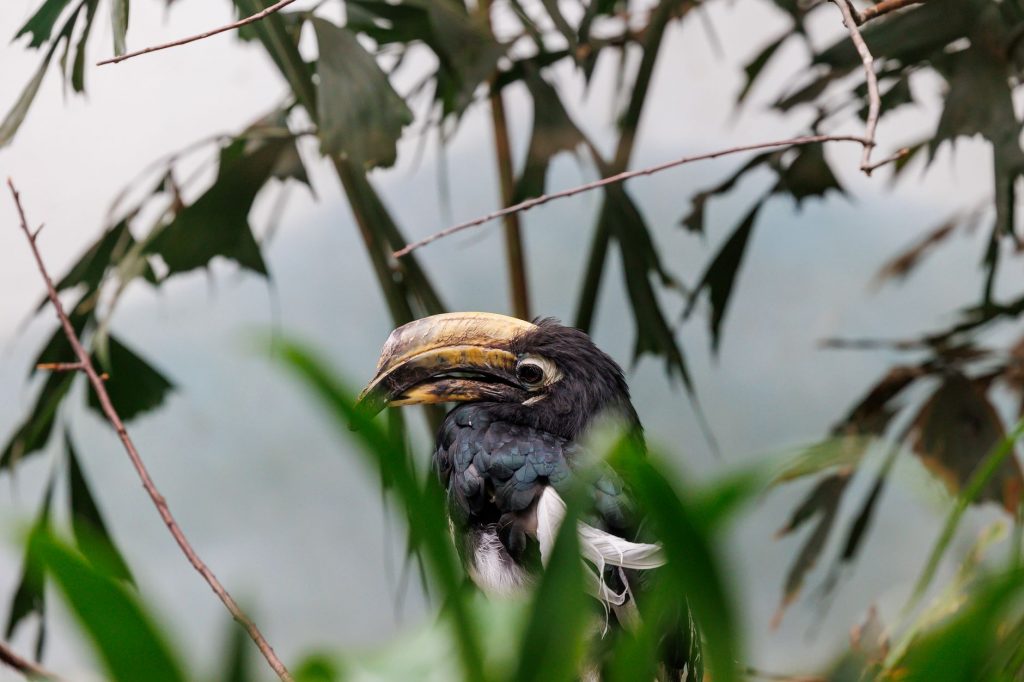
Are endangered hornbills being hunted to extinction in Assam’s forests?
A shocking incident in Assam’s Nagaon district has left wildlife lovers and conservationists aghast. Three individuals have been arrested for allegedly killing a rare great Indian hornbill. The gruesome incident has sparked heated debates on the state’s efforts to protect its avian heritage.
The incident occurred in the remote forest area of Nagaon district, where the three accused were reportedly caught with the bird’s carcass. The Assam Forest Department has confirmed the arrest and is now investigating the matter. According to officials, the three individuals, including a local forest guard, have been charged under the Wildlife Protection Act.
The great Indian hornbill is a critically endangered species found primarily in the northeastern states of India, including Assam. The bird is known for its distinctive casque or horn on its beak, which is a crucial part of its mating and feeding habits. Conservationists have been sounding the alarm on the declining hornbill population, citing habitat loss, poaching, and human-wildlife conflict as major threats.
What’s Driving the Hornbill Slaughter?
Experts point to a complex web of factors contributing to the decline of the hornbill population. Habitat destruction and fragmentation due to deforestation and urbanization have reduced the bird’s habitat, leaving them vulnerable to poaching. The growing demand for hornbill casques, used in traditional medicine and as decorations, has also led to increased poaching.
Additionally, human-wildlife conflict has become a pressing issue in Assam’s forests. As the state’s human population grows, so does the competition for resources, leading to clashes between humans and wildlife. In many cases, forest dwellers are forced to venture into protected areas in search of food and other essentials, putting them at odds with law enforcement and conservation efforts.
Assam’s Wildlife Protection Efforts
Despite these challenges, the Assam government has taken steps to protect the state’s wildlife, including the great Indian hornbill. The Assam Forest Department has established several wildlife sanctuaries and national parks, providing a safe habitat for the bird and other endangered species. The department has also launched awareness campaigns to educate local communities on the importance of conservation and the consequences of poaching.
However, more needs to be done to address the root causes of the hornbill slaughter. Conservationists are urging the government to take a more proactive approach to protect the bird’s habitat and address human-wildlife conflict. They are also calling for stricter enforcement of wildlife laws and increased public awareness on the importance of conservation.
What’s Next for the Hornbill?
The arrest of the three individuals is a significant step in the right direction, but it is only the tip of the iceberg. The Assam government must now take concrete action to address the underlying issues driving the hornbill slaughter. This includes strengthening conservation efforts, increasing public awareness, and providing support to local communities to coexist with wildlife.
The great Indian hornbill is a symbol of Assam’s rich biodiversity, and its protection is crucial for the state’s ecological balance. As we move forward, it is essential that we learn from this incident and work towards creating a safer, more sustainable future for the hornbill and other endangered species.
The Assam government’s handling of the situation will be closely watched by conservationists and the public. Will they take a firm stance against wildlife crime and address the root causes of the hornbill slaughter? Only time will tell.