
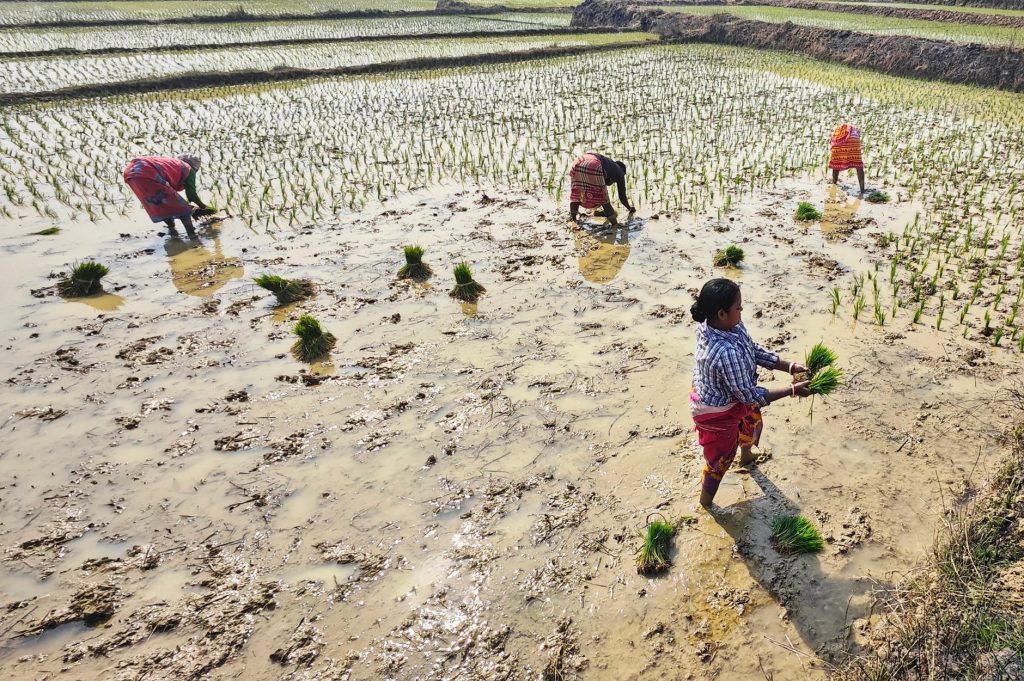
Are the long-standing demands of farmers and workers going to be met finally?
In a significant development, the Centre has agreed to two more demands, announced the Chief Justice of India (CJP) in a joint press conference.
The Demands
The Centre has agreed to increase the minimum support price (MSP) for farmers and to bring back the moratorium on loan repayment for farmers, two key demands of the farmers’ unions.
It’s been over a year since the farmers started their protest against the three farm laws. The protest has been ongoing, with farmers demanding that the laws be repealed and their concerns be addressed.
On the other hand, the Centre has been pushing for the repeal of the farm laws, but has been slow to address the concerns of the farmers.
So, what does this agreement mean for the farmers and workers who have been fighting for their rights?
The Background
To understand the significance of this agreement, we need to go back to the beginning of the farmers’ protest.
The protest started in November 2020, when the Centre introduced the three farm laws – the Farmers’ Produce Trade and Commerce (Promotion and Facilitation) Act, the Farmers (Empowerment and Protection) Agreement on Price Assurance and Farm Services Act, and the Essential Commodities (Amendment) Act.
The farmers were concerned that these laws would lead to the deregulation of the agriculture market, and make them vulnerable to exploitation by large corporations.
The farmers’ unions, led by the Samyukta Kisan Morcha, demanded that the laws be repealed and their concerns be addressed.
The Centre, on the other hand, has been pushing for the repeal of the farm laws, but has been slow to address the concerns of the farmers.
The Agreement
So, what exactly has the Centre agreed to?
According to the CJP, the Centre has agreed to increase the MSP for farmers, which will ensure that they get a fair price for their crops.
The Centre has also agreed to bring back the moratorium on loan repayment for farmers, which will give them some relief from the financial burden of paying off their loans.
These two demands are significant, as they address the core concerns of the farmers’ unions.
The agreement is a major breakthrough in the ongoing negotiations between the Centre and the farmers’ unions.
However, the question remains whether this agreement will be enough to end the protest.
Only time will tell, but for now, the farmers and workers can take some heart in the fact that their demands are being heard.
The Centre’s agreement to the two demands is a significant step forward, and it’s hoped that it will lead to a resolution of the protest.
As the negotiations continue, one thing is clear – the Centre needs to address the concerns of the farmers and workers if it wants to end the protest.
In conclusion, the Centre’s agreement to the two demands is a major development in the ongoing farmers’ protest.
It’s a significant step forward, and it’s hoped that it will lead to a resolution of the protest.
Only time will tell, but for now, the farmers and workers can take some heart in the fact that their demands are being heard.
The Centre needs to continue to work with the farmers’ unions to address their concerns and find a solution that works for everyone.
That’s why this matters – it’s a major breakthrough in the ongoing negotiations between the Centre and the farmers’ unions.
It shows that the Centre is willing to listen to the concerns of the farmers and workers, and it’s a significant step forward in finding a solution to the problem.
What happens next is anyone’s guess, but one thing is clear – the Centre needs to continue to work with the farmers’ unions to find a solution that works for everyone.
The agreement is a significant step forward, and it’s hoped that it will lead to a resolution of the protest.