
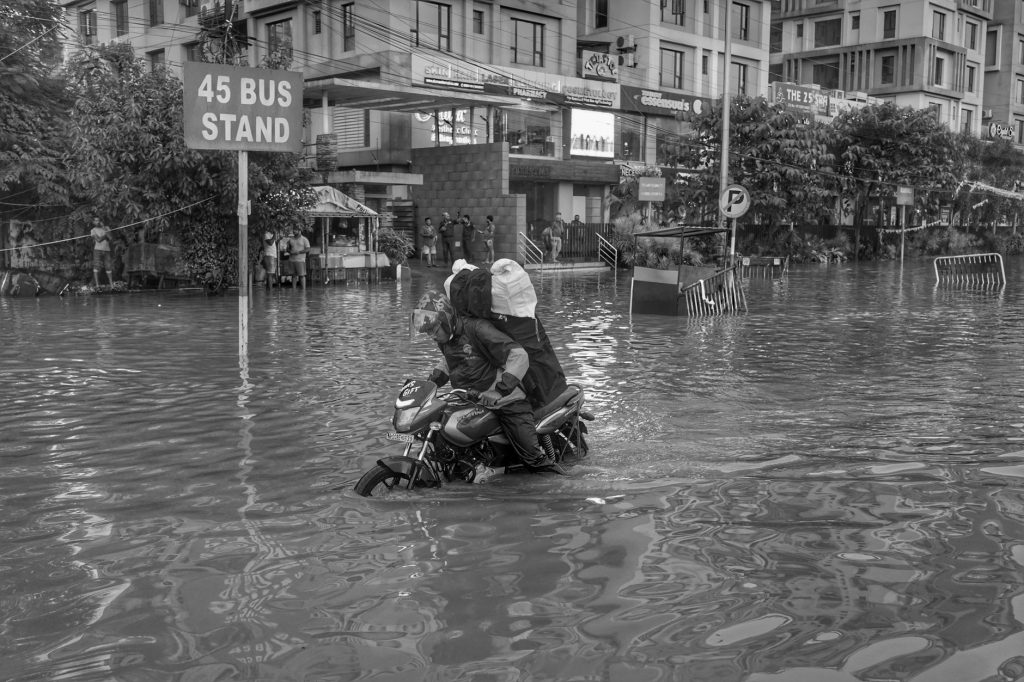
Imagine stepping out of your home in the morning, ready to take on the day, only to find yourself stuck in a sea of water and traffic chaos. This is a scenario many Delhiites are facing every time it rains. The city’s poor drainage system and heavy rainfall have combined to create a perfect storm of waterlogged roads and gridlocked traffic.
Yesterday, social media was flooded with videos and images of waterlogged roads and streets in various parts of the city. From the busy streets of Connaught Place to the residential areas of East Delhi, no area was spared. The videos showed cars and bikes stuck in knee-deep water, pedestrians wading through the flooded roads, and commuters trying to navigate through the chaos.
The situation was particularly bad in areas like Seelampur, Gokalpuri, and Trilokpuri, where the roads were completely submerged in water. The residents of these areas took to social media to share their experiences and demand action from the authorities. ‘We have been living in this area for years, but I have never seen the water rise so high. It’s not just the flooding, but also the lack of basic amenities like drainage and sewage systems,’ said one resident.
Expert Analysis: Why Delhi’s Drainage System Fails
According to experts, the city’s drainage system is inadequate and antiquated. ‘Delhi’s drainage system was designed many decades ago, and it’s not equipped to handle the kind of rainfall we receive nowadays,’ said Dr. Rakesh Kumar, a civil engineer and urban planner. ‘The city needs a modern and efficient drainage system that can handle the water flow and prevent flooding.’
Another expert, Dr. Sunita Narain, a well-known environmentalist, added, ‘The problem is not just with the drainage system, but also with the way we plan and develop our cities. We need to adopt a more sustainable and eco-friendly approach to urban planning that takes into account the impact of rainfall and flooding.’
What’s Being Done to Address the Issue?
The Delhi government has announced plans to upgrade the city’s drainage system and improve the floodwater management system. ‘We are working on a comprehensive plan to upgrade the drainage system and prevent flooding in the city,’ said a government spokesperson. ‘We will also be conducting a thorough review of the city’s drainage system and identifying areas that need immediate attention.’
However, many residents are skeptical about the government’s plans and feel that more needs to be done to address the issue. ‘We have heard promises before, but nothing has changed on the ground. We need concrete action and not just promises,’ said a resident.
As the city struggles to cope with the aftermath of the floods, one thing is clear: Delhi’s drainage system needs a complete overhaul. The city needs a modern and efficient system that can handle the water flow and prevent flooding. Until then, residents will continue to face the brunt of the city’s poor infrastructure.
The Delhi government must take immediate action to address the issue and provide relief to the affected residents. The city’s residents deserve better, and it’s time for the government to deliver. The time for promises is over; it’s time for action.
The situation in Delhi is a wake-up call for the government and the residents. It’s time to rethink our approach to urban planning and development and adopt a more sustainable and eco-friendly approach. The future of our city depends on it.