
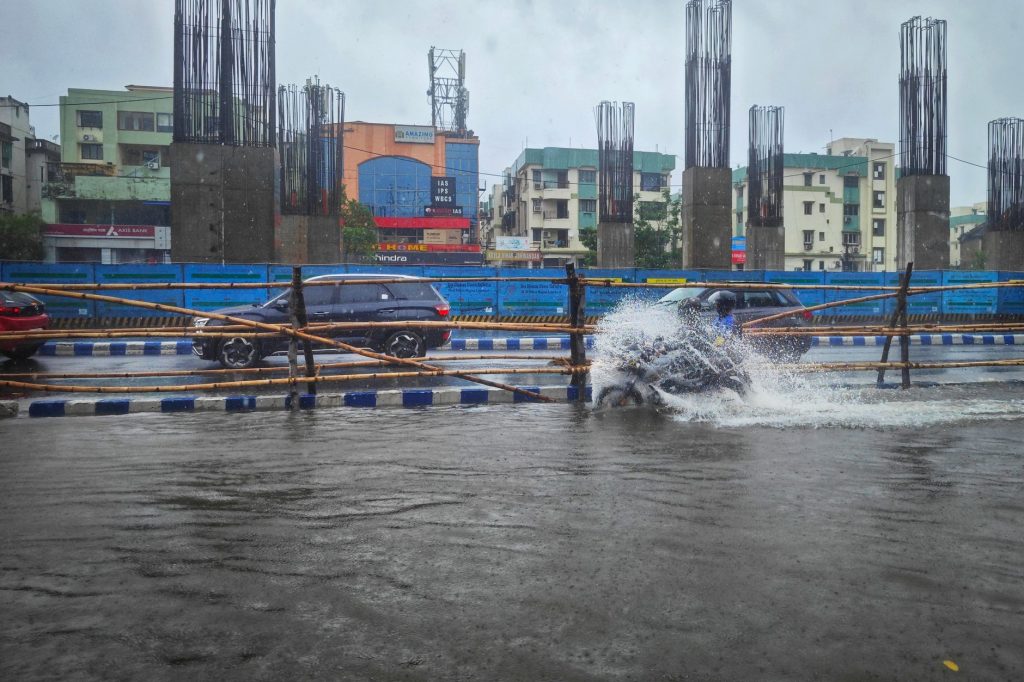
Heavy downpour in Maharashtra’s Palghar district has left commuters stranded and struggling to navigate through flooded railway tracks. The situation is a grim reminder of the state’s vulnerability to extreme weather conditions.
Footage captured on camera shows people wading through waist-deep water, their faces filled with a mix of fear and determination. The water-logged tracks have brought life to a standstill, with trains cancelled or delayed across multiple routes.
Why It Matters
The Palghar incident highlights the need for effective drainage systems in India’s rail network. The country’s expanding infrastructure is often compromised by inadequate planning and maintenance, leading to such situations.
Palghar’s flood-prone terrain and poor drainage infrastructure make it a ticking time bomb for commuters. The district’s geographical location, nestled between the Western Ghats and the Arabian Sea, makes it prone to heavy rainfall and landslides.
The Indian Railways, despite its efforts to modernize and upgrade infrastructure, has been criticized for its lack of preparedness in situations like these. The absence of proper drainage systems, coupled with the lack of contingency plans, has left commuters in a precarious position.
What Happens Next?
The Palghar incident has sparked calls for a comprehensive overhaul of the country’s rail infrastructure. Experts point out that investing in modern drainage systems and contingency planning can go a long way in mitigating such situations.
The Indian Railways has announced an emergency repair plan to restore services in the affected areas. However, commuters remain skeptical about the feasibility of these plans, given the lack of preparedness in the past.
As Palghar struggles to return to normalcy, the country is left wondering what it takes to ensure that commuters are safe and secure, even in the face of extreme weather conditions.
The Palghar incident serves as a stark reminder of the importance of investing in infrastructure and planning for contingencies. It is only when we prioritize the safety and convenience of commuters that we can build a more resilient and efficient rail network.