
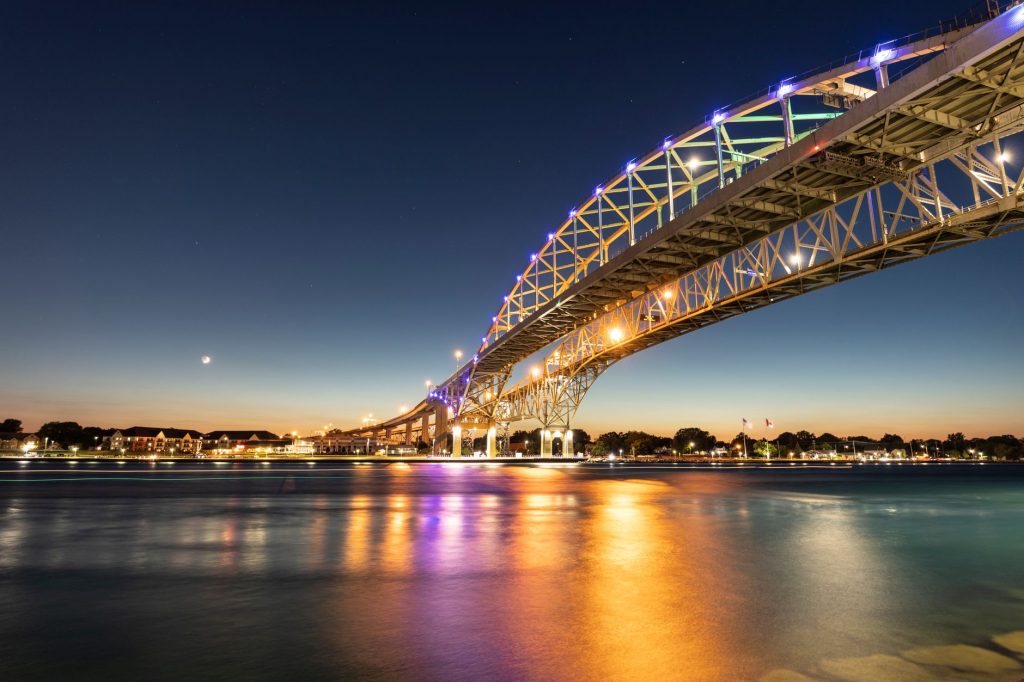
The Gordie Howe International Bridge, a highly anticipated gateway between Canada and the United States, has hit a roadblock – or rather, a construction delay. This $5.7 billion project, touted as a game-changer for trade and tourism, is now facing a significant setback, leaving many to wonder what this means for the future of international trade.
According to a recent update from bridge officials, the opening of the Gordie Howe International Bridge has been delayed, pushing its expected completion date from 2024 to 2025. While the reasons behind this delay are still unclear, one thing is certain – this will have far-reaching implications for countries like India, which rely heavily on international trade and investment.
A Bridge Too Far? The Background
For years, the Gordie Howe International Bridge has been touted as a vital link between Canada and the United States, promising to boost trade, tourism, and economic growth. This ambitious project aimed to connect Detroit, Michigan, to Windsor, Ontario, via a 2.5-kilometer cable-stayed bridge. The bridge’s construction began in 2018, and it was expected to open in 2024, coinciding with the 100th anniversary of the Ambassador Bridge, which currently connects the two cities.
However, delays and construction issues have been a recurring theme throughout the project’s history. From environmental concerns to labor disputes, the Gordie Howe International Bridge’s troubled past has raised questions about its viability. Now, with the latest delay, many are wondering whether this bridge will ever become the economic powerhouse it was promised to be.
The Impact on India
India, which has been actively engaging with Canadian trade partners in recent years, may feel the pinch of this delay. The two countries have a growing trade relationship, with bilateral trade valued at over $8 billion in 2020. The Gordie Howe International Bridge was seen as a key enabler of this trade, promising to reduce transportation costs and increase the efficiency of cargo movement between the two countries.
According to trade experts, the delay in the Gordie Howe International Bridge’s opening could lead to increased transportation costs and bottlenecks at existing border crossings. This, in turn, could impact Indian exporters, who rely on efficient and cost-effective logistics to stay competitive in the global market.
A New Normal? What’s Next
As the Gordie Howe International Bridge’s opening date slips further into the future, one thing is certain – the world of international trade will need to adapt. With the rise of e-commerce and digital trade, the traditional notions of border crossings and transportation infrastructure are being rewritten.
As India continues to engage with Canadian trade partners, it will need to find new ways to navigate the complexities of international trade. This may involve exploring alternative trade routes, investing in digital infrastructure, or developing new trade agreements that prioritize efficiency and ease of movement.
In the end, the delay of the Gordie Howe International Bridge serves as a reminder that international trade is a complex and ever-evolving beast. As we navigate the twists and turns of global trade, one thing remains constant – the need for adaptability, resilience, and a willingness to innovate.