
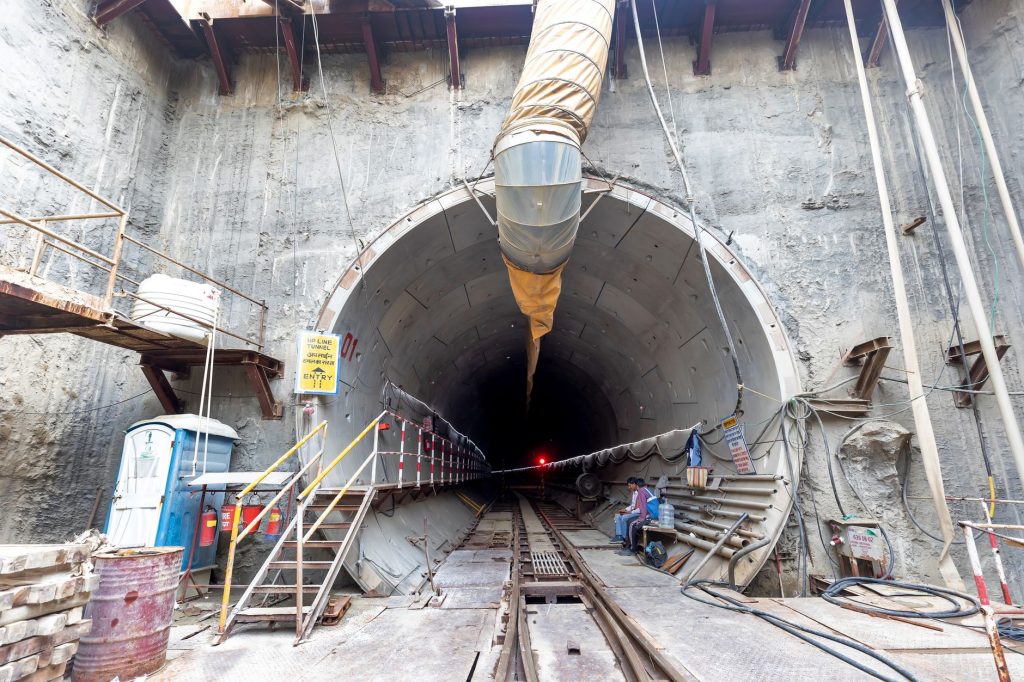
A devastating tunnel collapse at a hydropower project in India’s Himalayan region has claimed 10 lives, leaving 17 others missing and sparking a nationwide search operation.
The catastrophic incident occurred at the under-construction Tapovan-Vishnugad hydropower project in Uttarakhand’s Chamoli district, a region prone to natural disasters.
According to eyewitnesses, the tunnel collapse was triggered by heavy rainfall and a possible landslide, which caused a massive wall of water to flood the tunnel, trapping workers inside.
Rescue teams from the Indian Army, National Disaster Response Force (NDRF), and the State Disaster Response Force (SDRF) were quick to respond, launching a massive search operation in the remote region.
Despite the challenging terrain and harsh weather conditions, rescue teams managed to extract five bodies from the rubble, but 10 workers remain missing, leaving their families in a state of distress.
The Indian government has ordered a high-level probe into the incident, with the Union Minister for Power, Raj Kumar Singh, rushing to the site to oversee the rescue efforts.
Background: A Tragic History of Tunnel Collapses in India
Tunnel collapses have claimed several lives in India in the past, with the latest incident serving as a grim reminder of the risks involved in building infrastructure in the country’s rugged terrain.
India’s hydropower projects have long been a contentious issue, with environmentalists and local communities raising concerns about the impact of these projects on the fragile ecosystem and the lives of those living in the surrounding areas.
Experts point out that the lack of stringent safety norms and inadequate training of workers have contributed to the rise in tunnel collapses in India.
What Does This Mean for Indians?
The tragic incident at the Tapovan-Vishnugad hydropower project serves as a wake-up call for the Indian government to revamp its safety protocols and ensure that workers involved in infrastructure projects are adequately trained and equipped to handle challenging situations.
Additionally, the incident highlights the need for greater transparency and accountability in the hydropower sector, with the government coming under pressure to respond to the growing concerns of environmentalists and local communities.
As the rescue operation continues, the nation holds its breath, hoping that the remaining workers will be safely extracted from the rubble.
The incident also raises questions about the efficacy of India’s disaster response mechanisms, which have been criticized for being slow and inadequate in responding to emergencies.
As the country mourns the loss of lives, it is essential to learn from this tragedy and work towards building safer and more resilient infrastructure that prioritizes the lives and well-being of workers and local communities.