
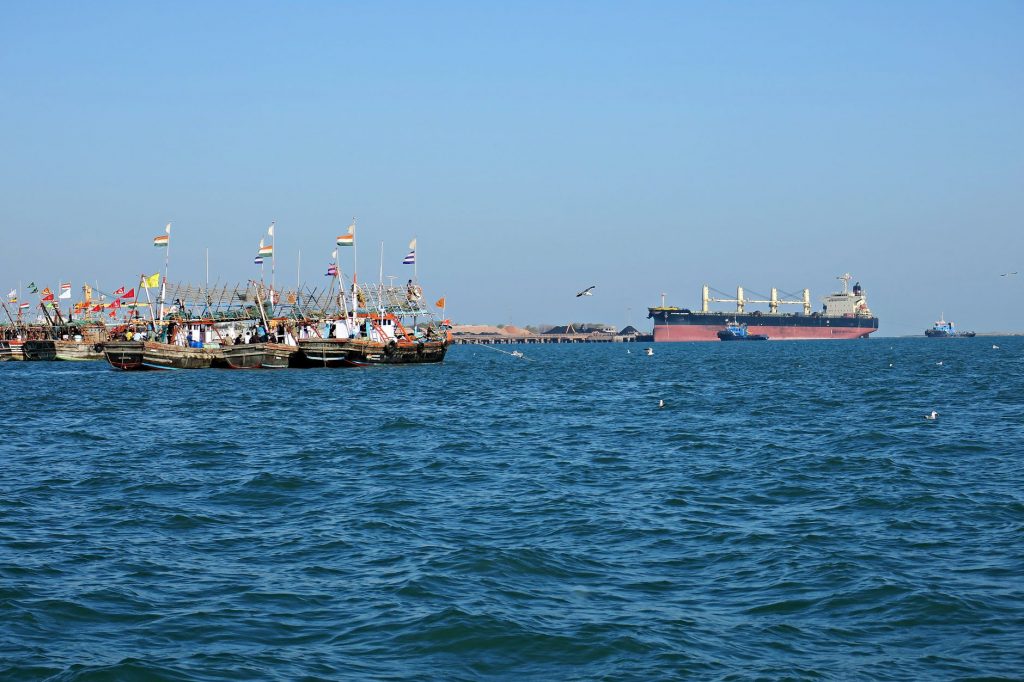
Imagine being stuck in a foreign port, away from family and loved ones, with no clear date to return home. For 13 Indian vessels stranded in the strategic Hormuz Strait, this has been a harsh reality for months.
The Hormuz Strait, which connects the Persian Gulf to the Gulf of Oman, is a crucial waterway for international trade. However, tensions between the US and Iran over the past year have made it a volatile and unpredictable place for ships to navigate.
The 13 Indian vessels, including oil tankers and cargo ships, were caught in the middle of this conflict. While some managed to escape, 13 are still stuck, waiting for a break in the impasse between the two nations.
US-Iran Peace Deal: A Ray of Hope?
The recent US-Iran peace deal has raised hopes that the stranded vessels might finally be able to return home. The agreement, which was brokered by European powers, aims to revive the 2015 nuclear deal and ease tensions between the two nations.
However, experts warn that the deal is still in its early stages and much work needs to be done before it can have a tangible impact on the situation in Hormuz.
‘The US-Iran peace deal is a welcome development, but it’s too early to say whether it will directly affect the stranded Indian vessels,’ said Dr. Sanjiv Bhasin, a maritime expert at the Indian Institute of Technology.
According to Dr. Bhasin, the deal will take time to implement, and even then, it’s unclear whether it will have a direct impact on the situation in Hormuz.
‘The Indian government has been working closely with the Iranian authorities to secure the release of the stranded vessels,’ Dr. Bhasin said.
Stranded Vessels: A Humanitarian Crisis?
The prolonged stay of the Indian vessels in Hormuz has caused significant hardship for the crew members, many of whom have been stuck for months. The crew members, who are from different parts of India, have been living in cramped and unsanitary conditions, with limited access to basic amenities.
‘The situation is dire,’ said Captain Harish Kumar, a crew member on one of the stranded vessels. ‘We’re stuck here with no clear date to return home. It’s taking a toll on our mental and physical health.’
The Indian government has been working to provide support to the crew members, including food, medical aid, and other essential supplies. However, the situation remains precarious, and experts warn that it could deteriorate further if the US-Iran tensions escalate.
What’s Next?
The Indian government is keeping a close eye on the situation in Hormuz and is working to secure the release of the stranded vessels. While the US-Iran peace deal offers a glimmer of hope, it’s unclear whether it will have a direct impact on the situation.
‘The Indian government will continue to work with the Iranian authorities to secure the release of the stranded vessels,’ said a government spokesperson.
As the situation in Hormuz remains volatile, one thing is clear: the return of the Indian vessels will depend on the success of the US-Iran peace deal and the ability of the two nations to work together to address their differences.
In the meantime, the crew members of the stranded vessels will continue to wait anxiously for news of their release, hoping that the US-Iran deal will bring relief to their situation.