
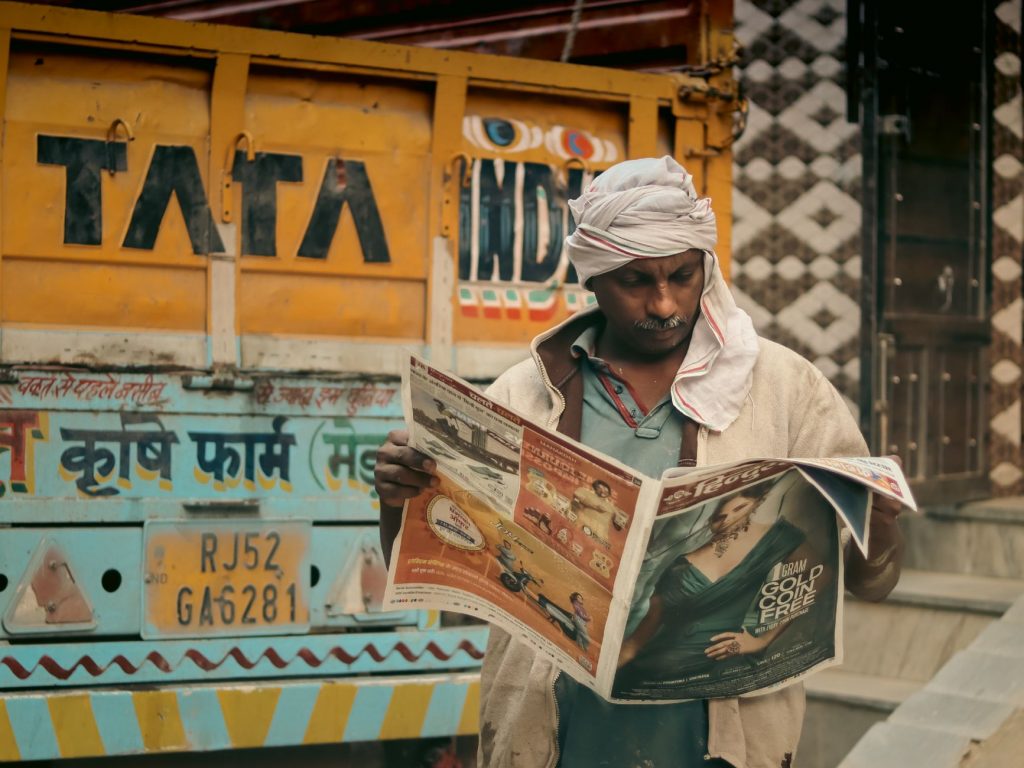
India’s mainstream media has hit an all-time low, losing an entire generation of young Indians who are increasingly tuning out from traditional news sources. According to a recent report, nearly 60% of Indians in the 18-35 age group rely on social media for news, rendering traditional media obsolete.
But why is this happening? The answer lies in the way mainstream media has failed to adapt to the changing times. With the proliferation of social media and online news sources, the traditional media landscape has become increasingly fragmented. News channels and newspapers have struggled to keep up, failing to offer the kind of engaging and interactive content that younger audiences crave.
The result is a lost generation of Indians who are growing up without a connection to traditional media. This is not just a loss for the media industry, but also for Indian society as a whole. As a young nation, India needs a vibrant and diverse media landscape to hold its leaders accountable and facilitate informed discussion.
A Generation Disconnected
The statistics are stark. A recent survey found that 75% of Indians in the 18-35 age group prefer to get their news from social media platforms like Facebook, Twitter, and WhatsApp. This is a far cry from the days when news channels like Doordarshan and All India Radio were the primary sources of information for Indians.
The shift to social media has also led to the rise of ‘fake news’ and misinformation. With the lines between fact and fiction increasingly blurred, it’s becoming harder for Indians to separate truth from falsehood. This has serious implications for Indian democracy, where informed decision-making is crucial for the country’s growth and development.
The Media’s Failure to Adapt
So, what has gone wrong? The answer lies in the media’s failure to adapt to the changing times. News channels and newspapers have struggled to move beyond their traditional formats, sticking to the same old formulas that have become stale and unappealing to younger audiences.
Instead of innovating and experimenting with new formats, the media has opted for a ‘business-as-usual’ approach, hoping that younger Indians will eventually come back to traditional media. But this approach is flawed, as it fails to address the fundamental needs and preferences of younger audiences.
What’s Next for India’s Media?
So, what’s next for India’s media? The answer is not straightforward, but one thing is certain – the media needs to change. It needs to adapt to the changing times, embracing new formats and technologies that can engage and inform younger audiences.
This will require a fundamental shift in the way the media operates, moving away from the old formulas and embracing a more interactive and immersive approach. It will also require a greater focus on fact-checking and verification, to combat the spread of misinformation and ‘fake news’.
The stakes are high, but the rewards are worth it. If India’s media can successfully adapt to the changing times, it can play a vital role in shaping the country’s future, holding its leaders accountable and facilitating informed discussion. The clock is ticking – will the media rise to the challenge, or will it continue to lose an entire generation of Indians?