
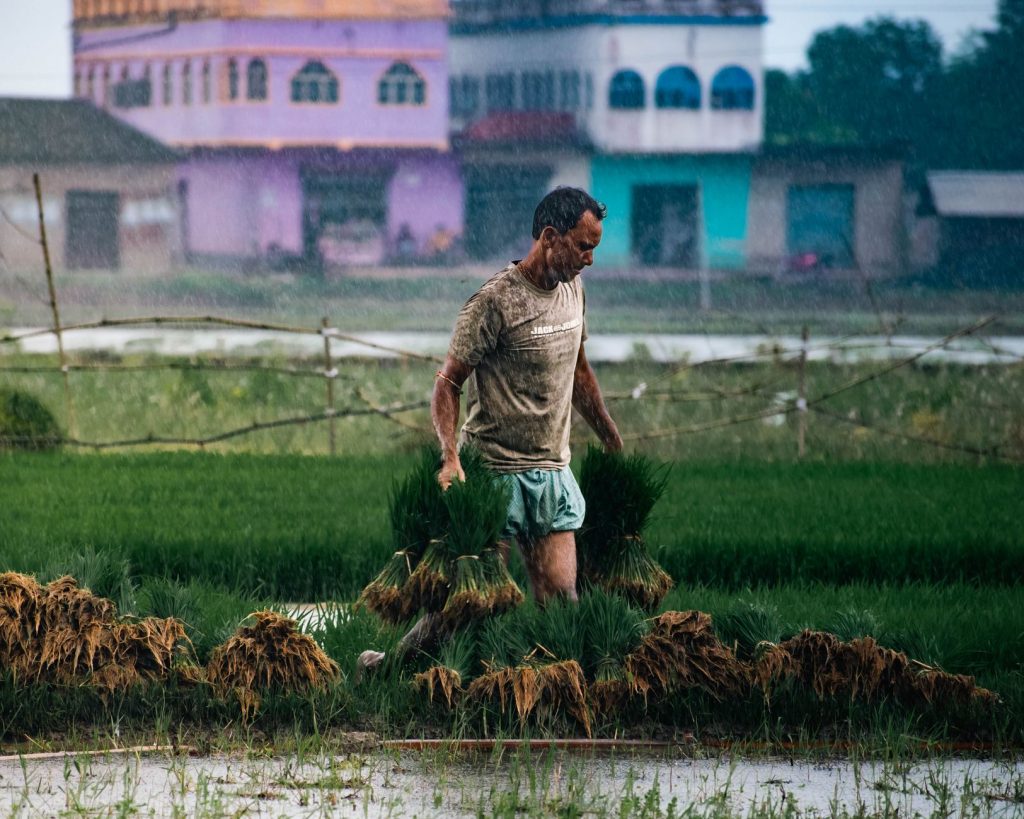
India’s summer crop planting has gained momentum with the onset of monsoon rains across the country. Farmers are now busy planting crops like rice, wheat, and pulses, marking a significant turnaround from the previous year’s drought-like conditions. The monsoon rains have brought much-needed relief to the agricultural sector, which accounts for a substantial portion of the country’s economy.
The Indian Meteorological Department (IMD) has forecasted a normal monsoon season this year, with an estimated rainfall of 104% of the long period average (LPA). The IMD’s prediction has boosted farmers’ confidence, leading to an increase in planting activities. As a result, the country is expected to witness a significant rise in crop production, contributing to food security and economic growth.
Impact on Farmers and Economy
The monsoon rains have had a profound impact on farmers, who are the backbone of the country’s agricultural sector. With the onset of rains, farmers are now busy planting crops, which will not only provide them with a steady income but also help them meet their crop loan repayments. The increased crop production is also expected to lead to a decline in food prices, making essential commodities more affordable for the common man.
The agricultural sector accounts for around 18% of India’s GDP and provides employment to millions of people. The sector’s growth is critical to the country’s overall economic development. With the monsoon rains having a positive impact on crop production, the sector is expected to witness significant growth, contributing to the country’s economic prosperity.
Challenges Ahead
Although the monsoon rains have brought relief to the agricultural sector, farmers still face various challenges. The country’s water resources are under stress due to the increasing demand for irrigation water, coupled with a decline in water tables. Additionally, climate change has become a major concern, with rising temperatures and changing rainfall patterns affecting crop yields and farmers’ income.
Therefore, the government needs to take proactive measures to address these challenges. This includes increasing investment in irrigation infrastructure, promoting water-saving technologies, and implementing climate-resilient agricultural practices. By doing so, the government can ensure that the country’s agricultural sector continues to grow, contributing to the country’s overall economic development.
In conclusion, the onset of monsoon rains has marked a significant turning point for India’s agricultural sector. With the sector expected to witness significant growth, the country is likely to experience a rise in crop production, contributing to food security and economic growth. However, the government must address the challenges facing the sector to ensure its continued growth and prosperity.