
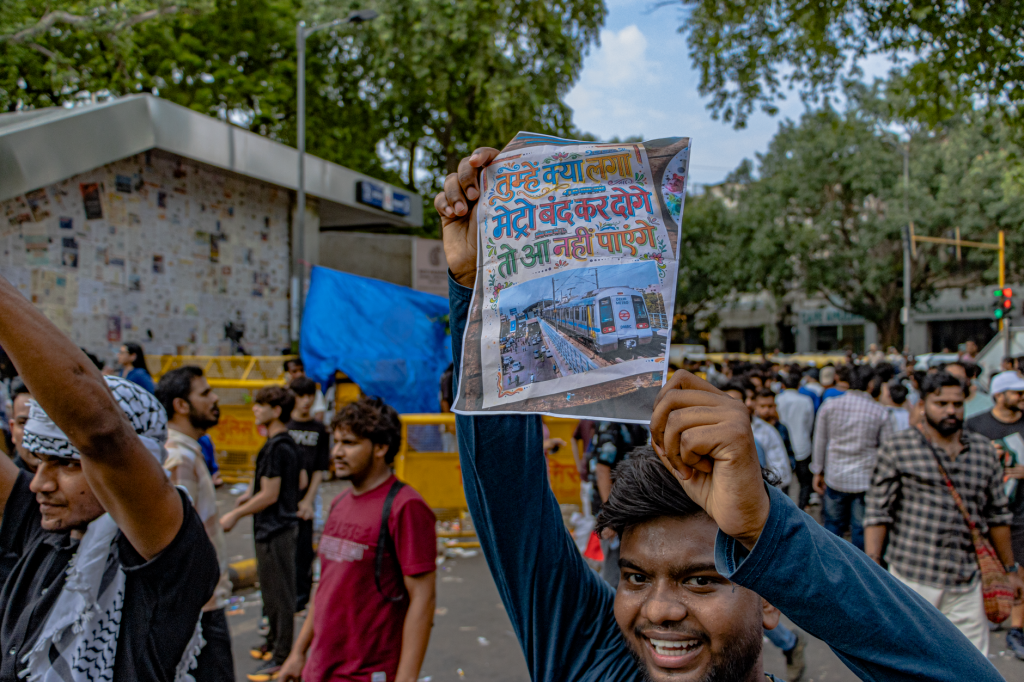
The streets of India’s capital city, Delhi, have witnessed a surge in student protests in recent years. But when thousands of young people gathered outside the parliament this month, something remarkable happened. The government was forced to resign a minister, a rare occurrence in the country’s history. The young protesters, mostly from Gen Z, have been making headlines with their demands for better education and economic opportunities.
The protests began with a hashtag #BharatTereTukdeHogi on social media, which translates to ‘India will be broken into pieces.’ The movement quickly gained momentum, with thousands of students from top universities taking to the streets. Their message was clear: they want a better future for themselves and their country.
What Triggered the Protests?
The trigger for the protests was the government’s decision to introduce a new education policy, which students saw as a threat to their future. The policy included provisions that would have made it difficult for students to pursue higher education, and would have increased the fees for existing courses. The students saw this as an attempt to silence their voices and limit their opportunities.
But the protests went beyond just the education policy. The students were also angry about the rising unemployment rates, the lack of economic opportunities, and the government’s failure to address these issues. They felt that the government was more interested in serving the interests of big corporations and the wealthy elite, rather than the common people.
The protests were not limited to just Delhi. Similar movements were seen in other cities across the country, including Mumbai, Bengaluru, and Chennai. The students were united in their demands, and their message was clear: they want a better future for themselves and their country.
What’s Next for the Protests?
So, what’s next for the protests? The government has promised to address the students’ demands, but it’s unclear whether they will follow through on their promises. The students are wary of the government’s intentions, and they are planning to keep the pressure on.
The protests have also sparked a national debate about the role of education in shaping the country’s future. Many Indians are now asking questions about the quality of education, the rising costs of higher education, and the lack of job opportunities for young people.
Expert analysts say that the protests are a wake-up call for the government to address the country’s economic and social challenges. ‘This is just the start,’ says Dr. Ramesh, a leading economist. ‘The young people of India are not just protesting for their rights; they are demanding a better future for themselves and their country.’
What Does it Mean for India’s Politics?
The protests have significant implications for India’s politics. The country is set to go to the polls next year, and the young voters are likely to play a crucial role in shaping the electoral outcome.
The protests have also shown that the young people of India are no longer content with just being silent spectators in the country’s politics. They are now demanding change, and they are willing to fight for it.
As the country prepares for the elections, the protests are a reminder that the young people of India are no longer just a demographic; they are a force to be reckoned with.