
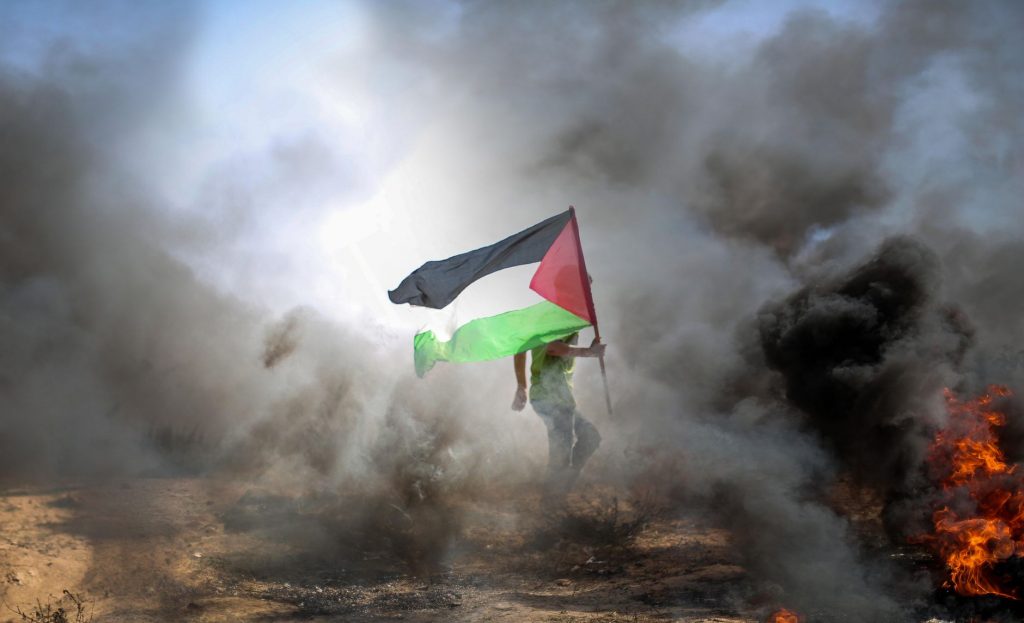
Israel has rejected a 15-point plan proposed by the US President Donald Trump’s administration to disarm Hamas, a Palestinian Islamist organization that controls the Gaza Strip. The plan, announced last month, aimed to bring peace to the region by disarming Hamas and facilitating an Israeli withdrawal from Gaza.
The proposal was met with skepticism by Israel, which has been at odds with Hamas for decades. Israel’s rejection of the plan is a significant setback for the Trump administration, which had hoped to broker a lasting peace deal between Israel and the Palestinians. The plan’s rejection also highlights the deep-seated mistrust between Israel and Hamas, which has made it difficult to achieve a lasting peace in the region.
Why It Matters
The Israeli-Palestinian conflict is one of the most enduring and complex conflicts in the world. The conflict has its roots in the early 20th century, when Zionist Jews, who were fleeing persecution in Europe, began to immigrate to Palestine, then under Ottoman rule. The influx of Jewish immigrants led to tensions with the Arab population, which had been living in the region for centuries. The conflict escalated after World War II, when the international community, led by the United States, supported the creation of a Jewish homeland in Palestine.
Today, the conflict is characterized by periodic outbreaks of violence, including rocket attacks by Hamas on Israeli cities and Israeli military operations in Gaza. The conflict has also led to a humanitarian crisis in Gaza, where poverty, unemployment, and lack of access to basic services such as healthcare and education are rampant. A lasting peace deal between Israel and the Palestinians is essential to resolving the conflict and improving the lives of millions of people in the region.
The Rejection of the Plan
Israel’s rejection of the Trump administration’s plan is not surprising, given the country’s long-standing position on Hamas. Israel views Hamas as a terrorist organization that has repeatedly attacked its citizens and refuses to recognize its right to exist. Israel has also been skeptical of the Trump administration’s plan, which it believes does not adequately address its security concerns.
The plan, which was announced last month, called for Hamas to disarm and for Israel to withdraw from Gaza. The plan also proposed the creation of a Palestinian state, with its capital in East Jerusalem. However, the plan did not provide sufficient guarantees for Israel’s security, which is a major concern for the country. Israel has repeatedly stated that it will not compromise on its security, and the Trump administration’s plan did not provide the necessary assurances.
What Happens Next
The rejection of the Trump administration’s plan is a significant setback for the peace process. The plan was seen as a last-ditch effort by the Trump administration to broker a peace deal between Israel and the Palestinians before the US presidential election in November. With the plan’s rejection, it is unclear what happens next. The Trump administration may try to revise the plan and resubmit it to Israel and the Palestinians, or it may abandon its efforts to broker a peace deal altogether.
For India, the developments in the Middle East are significant, given the country’s growing ties with Israel and its historical support for the Palestinian cause. India has been trying to balance its relationships with both Israel and the Palestinians, and the rejection of the Trump administration’s plan may require New Delhi to re-evaluate its approach to the conflict. India may need to engage more closely with both Israel and the Palestinians to encourage a peaceful resolution to the conflict.
In conclusion, the rejection of the Trump administration’s plan to disarm Hamas is a significant development in the Israeli-Palestinian conflict. The plan’s rejection highlights the deep-seated mistrust between Israel and Hamas and the difficulties of achieving a lasting peace in the region. As the situation continues to unfold, it is essential for India and the international community to remain engaged and to support efforts to achieve a peaceful resolution to the conflict.