
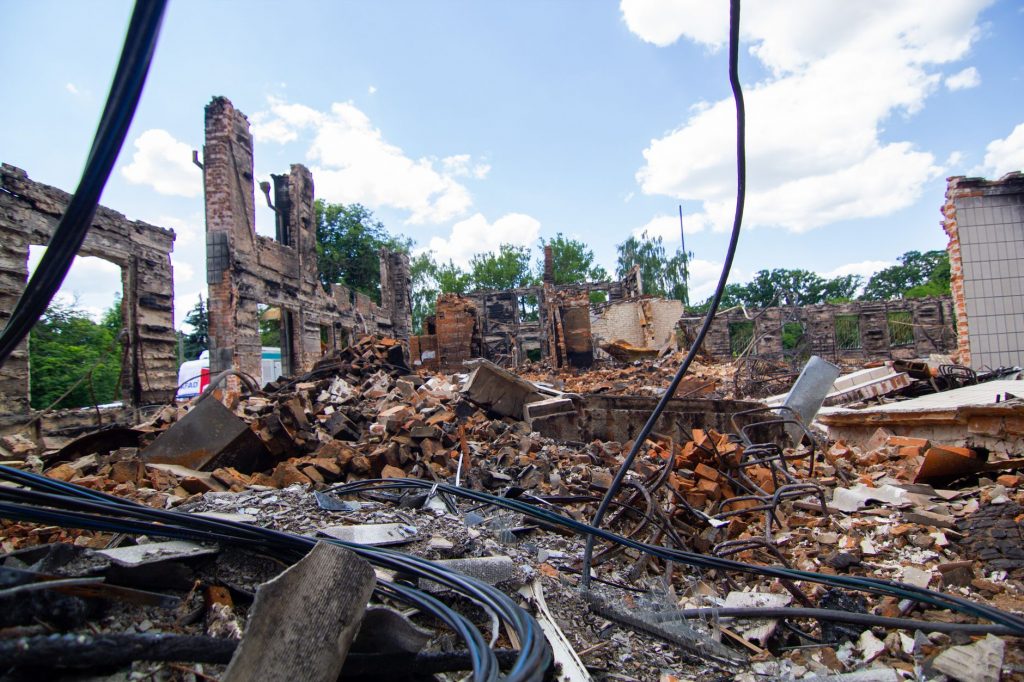
Imagine you’re walking down a busy street in Mumbai or Delhi, surrounded by towering buildings and crowded markets, when suddenly the ground beneath your feet starts shaking violently. The sounds of car alarms, shattering glass, and screams fill the air as people rush to find safety. This is what happened in Japan recently, when a massive earthquake struck the country, leaving a trail of destruction in its wake.
The earthquake, which measured 7.1 on the Richter scale, was powerful enough to cause widespread damage and chaos. Videos and images emerging from Japan show the devastating impact of the quake, with buildings reduced to rubble, roads split open, and debris scattered everywhere. One of the most shocking images is that of a collapsed mall, where shoppers had gathered just moments before the earthquake struck.
Earthquake Devastation in Japan
The Japanese government has confirmed that several people have been injured, and many more are still trapped under the rubble. Rescue teams are working tirelessly to search for survivors and provide aid to those affected. The earthquake has also disrupted transportation systems, with flights and trains cancelled or delayed. The country’s emergency services are on high alert, with evacuation centers set up to provide shelter and food to those in need.
As the people of Japan struggle to come to terms with the disaster, the international community is offering its support and condolences. The Indian government has expressed its solidarity with Japan, and many Indians are taking to social media to offer their prayers and best wishes to those affected. The earthquake is a stark reminder of the power of nature and the importance of being prepared for natural disasters.
Understanding Earthquakes and Their Impact
So, what causes earthquakes, and why are they so destructive? Earthquakes occur when there is a sudden release of energy in the Earth’s crust, usually as a result of tectonic plate movement. This energy release creates seismic waves that can travel long distances, causing the ground to shake and buildings to collapse. Japan is located in a seismically active region, where several tectonic plates meet, making it prone to earthquakes.
According to experts, the impact of an earthquake depends on several factors, including the magnitude of the quake, the depth of the epicenter, and the type of soil and rock in the affected area. In Japan’s case, the earthquake was relatively shallow, which made it more destructive. The country’s geography, with its mountains and valleys, also made it more vulnerable to landslides and soil liquefaction.
Lessons for India
So, what can India learn from Japan’s experience? Firstly, it’s essential to have a robust disaster management system in place, which includes early warning systems, evacuation drills, and emergency response plans. India has made significant progress in this area, with the National Disaster Management Authority (NDMA) playing a crucial role in coordinating disaster response efforts.
Secondly, India needs to invest in earthquake-resistant infrastructure, including buildings, bridges, and roads. This requires adopting and enforcing strict building codes, conducting regular safety audits, and providing training to architects, engineers, and contractors. The government can also incentivize the use of earthquake-resistant materials and techniques in construction projects.
Finally, it’s essential to raise awareness about earthquake risk and promote a culture of preparedness among the public. This can be done through education and outreach programs, which teach people what to do during an earthquake, how to evacuate safely, and how to respond to emergencies. By learning from Japan’s experience and taking proactive steps, India can reduce its vulnerability to earthquakes and minimize the impact of such disasters.