
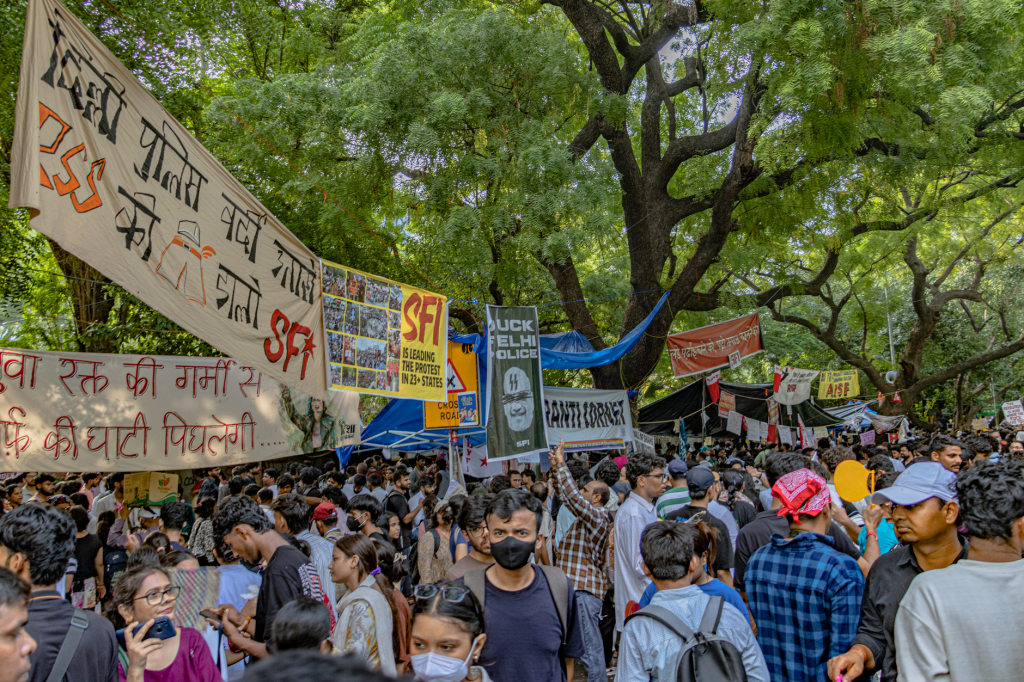
The Supreme Court of India has issued a landmark directive to all states, instructing them to release protesters detained during the CJP (Citizens for Justice and Peace) agitation, provided they have no prior criminal convictions.
The order comes as a major relief to scores of protesters who were arrested during the campaign against the Central Bureau of Investigation’s (CBI) alleged mishandling of corruption cases.
Background on the CJP Protest
The CJP, a coalition of civil society groups and activists, launched a nationwide protest in 2018 against the CBI’s alleged corruption and inefficiency in tackling high-profile cases.
The protest, which saw widespread participation from citizens, including students, lawyers, and ordinary citizens, was marked by peaceful rallies, sit-ins, and marches.
However, despite the peaceful nature of the protests, the police crackdown on protesters resulted in hundreds of arrests, with many being detained for extended periods.
Supreme Court’s Directive
The Supreme Court’s directive is a significant development in the ongoing saga of protest and police crackdowns in India.
The bench, led by Justice DY Chandrachud, underscored the importance of upholding the fundamental rights of citizens, including the right to peaceful assembly and expression.
The court observed that the detention of protesters without a valid reason or prior criminal record is a clear breach of Article 21 of the Constitution, which guarantees the right to life and liberty.
In its order, the court specifically instructed states to release protesters who have no prior convictions, and to ensure that those detained are provided with fair trial and due process.
What Does This Mean for Indians?
The Supreme Court’s directive has far-reaching implications for Indians, particularly in the context of the ongoing protests against various government initiatives and policies.
The ruling sends a strong message to states and law enforcement agencies that the right to peaceful assembly and expression is a fundamental right that must be respected and protected.
It also underscores the need for police forces to exercise restraint and caution when dealing with protesters, and to avoid arbitrary arrests and detentions.
The directive will undoubtedly have a positive impact on the lives of protesters who have been detained without cause, and will help to restore public trust in the justice system.
As the country continues to grapple with issues of corruption, inequality, and social injustice, the Supreme Court’s order serves as a beacon of hope for those who are fighting for a more just and equitable society.
In the words of Justice Chandrachud, ‘The right to peaceful assembly and expression is a cornerstone of democracy, and it is the duty of the state to protect and uphold this right.’
The Supreme Court’s directive is a significant step towards upholding the fundamental rights of citizens and protecting the democratic fabric of our nation.
It remains to be seen how states will implement this directive, but one thing is certain – the Supreme Court has sent a clear message that the rights of citizens will be protected, and that the rule of law will prevail.