
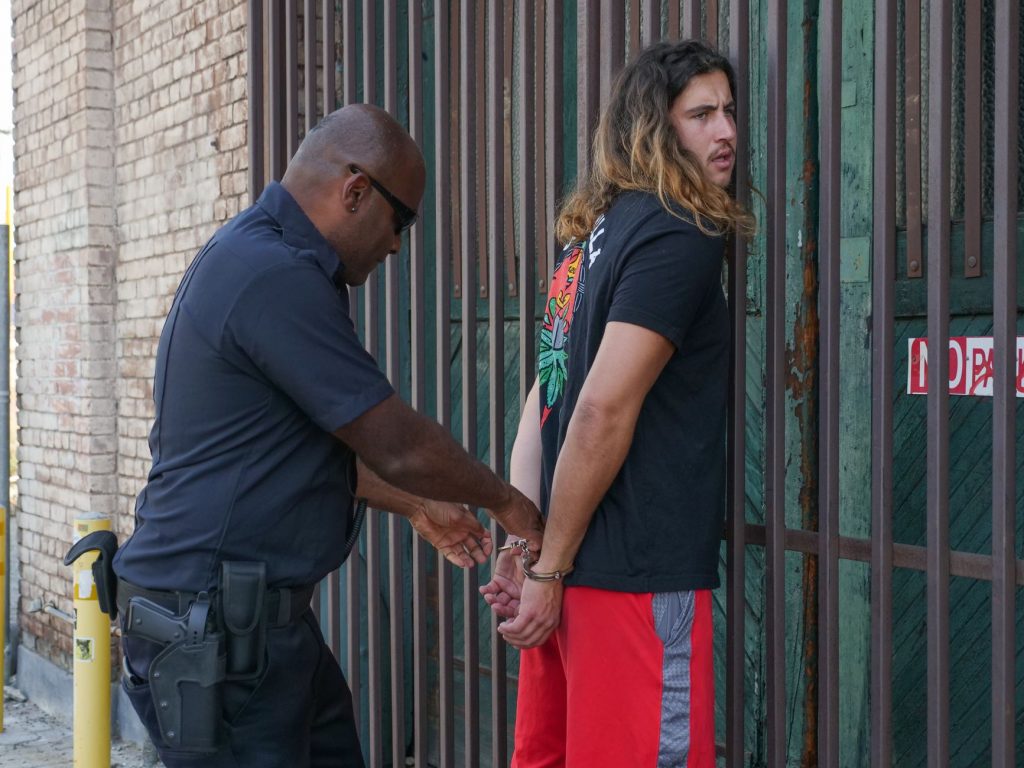
Are DMK leaders above the law, or is the state just cracking down on them? The question is being raised after the arrest of Udhayanidhi Stalin, a key DMK leader, over a controversial remark made about actor Trisha.
The controversy began when Udhayanidhi Stalin, the Tamil Nadu Minister for Youth Welfare and Sports Development, made a comment about Trisha at an event in Chennai. The remark, which was widely reported in the media, was seen as derogatory by many, including the actress herself.
As the news spread, the hashtag #JusticeForTrisha began trending on social media, with many demanding action against Udhayanidhi Stalin. The state government, however, took a different view, with Chief Minister MK Stalin denying any wrongdoing by his nephew.
However, the police had other ideas. They registered a case against Udhayanidhi Stalin under sections of the Indian Penal Code (IPC) dealing with insult and criminal intimidation. The DMK leader was subsequently arrested and produced before a court, which granted him bail.
But the DMK is not taking this lying down. Party leaders have been quick to cry foul, accusing the state government of a vendetta against their leader. They claim that the arrest is a politically motivated move to silence Udhayanidhi Stalin, who has been a vocal critic of the government.
However, the state government has denied these allegations, saying that the law will take its course. The Chief Minister has also come out in support of his nephew, saying that he is confident that the charges against him will be proved false.
The Law vs. Politics
The arrest of Udhayanidhi Stalin has raised questions about the relationship between the law and politics in India. While the government claims that the arrest is a routine exercise of the law, many see it as a politically motivated move to silence a vocal critic.
Udhayanidhi Stalin’s comment about Trisha may have been inappropriate, but is it enough to warrant arrest? The DMK claims that the charge is a gross exaggeration, and that the real intention is to harass and intimidate their leader.
The case has also highlighted the role of social media in shaping public opinion. The hashtag #JusticeForTrisha trended on Twitter, with many demanding action against Udhayanidhi Stalin. But is this a genuine expression of public outrage, or is it being manipulated by the state government to justify the arrest?
The answer to these questions will only emerge as the case unfolds. For now, the DMK is digging in its heels, determined to fight for its leader’s rights. The state government, on the other hand, seems determined to see the law through.
The DMK’s Response
The DMK has been quick to respond to the arrest of Udhayanidhi Stalin, with party leaders coming out in support of their leader. The party has accused the state government of a vendetta, saying that the arrest is a blatant attempt to silence Udhayanidhi Stalin.
Party leader MK Stalin has also weighed in, saying that he is confident that the charges against his nephew will be proved false. He has also accused the state government of trying to create a controversy where none exists.
The DMK has also called for a joint parliamentary committee (JPC) probe into the arrest, saying that it is a clear case of political vendetta. The party has also asked for a clarification from the state government on the circumstances leading to Udhayanidhi Stalin’s arrest.
The DMK’s response is not surprising, given the party’s close ties with Udhayanidhi Stalin. But what is clear is that the party is not going to back down without a fight.
The Way Forward
The arrest of Udhayanidhi Stalin is a complex case, with different interpretations and motivations at play. While the DMK sees it as a vendetta, the state government claims that it is a routine exercise of the law.
The case will now go to trial, with Udhayanidhi Stalin facing charges of insult and criminal intimidation. The DMK has vowed to fight the case, and the party’s supporters are already calling for a campaign to free their leader.
The question now is what happens next. Will the DMK be able to prove its allegations of a vendetta, or will the state government succeed in its efforts to silence Udhayanidhi Stalin? Only time will tell.
The arrest of Udhayanidhi Stalin is a clear reminder that in India, the law can be a powerful tool for those in power. But it also highlights the need for accountability and transparency in the functioning of the state.
As the case unfolds, one thing is clear: the DMK will not go down without a fight. And the state government will have to be prepared to face the consequences of its actions.