
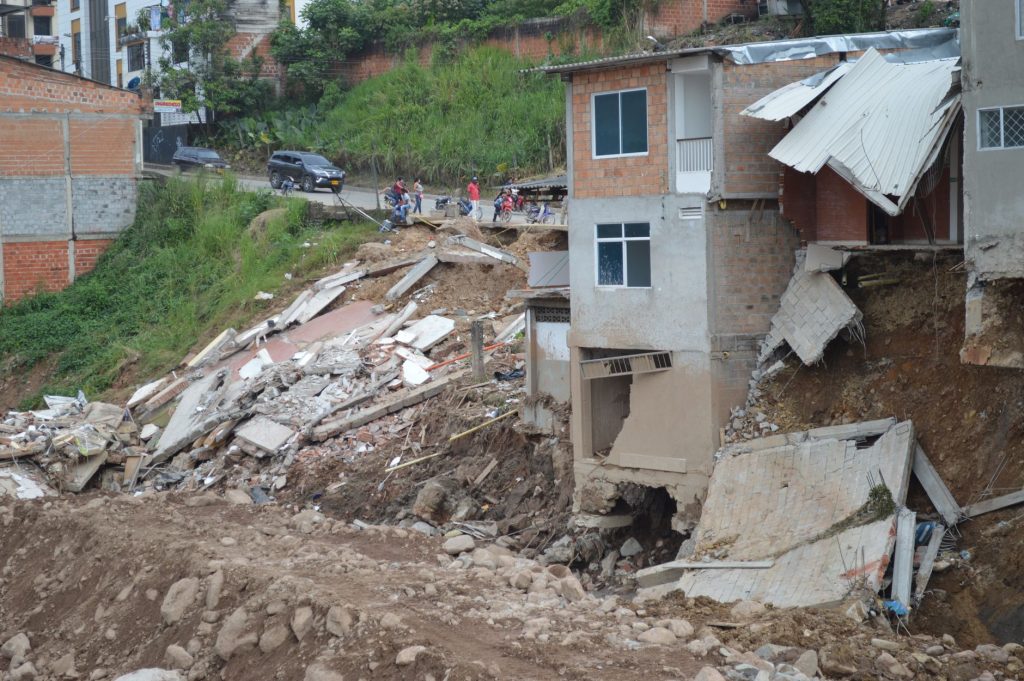
A staggering revelation has emerged from the realm of space technology, where satellite-mounted lasers have successfully mapped the profound impact of Venezuela’s recent earthquakes on the Earth’s crust. The sheer magnitude of terrain shift is a marvel, with the Earth’s surface undergoing significant transformations in the aftermath of these seismic events. To put this into perspective, the twin quakes that struck Venezuela have left an indelible mark on the planet’s geography, with the satellite imagery revealing a drastic reshaping of the terrain.
The background to this story is equally fascinating. Venezuela, a country located in the northern part of South America, has been prone to earthquakes due to its unique geology. The region is situated near the boundary between the Caribbean and South American tectonic plates, making it a hotspot for seismic activity. The twin quakes that occurred in recent times were particularly significant, not only due to their magnitude but also because of their impact on the Earth’s crust.
Understanding the Technology
To comprehend the extent of the damage, it is essential to understand the technology used to map the Earth’s surface. Satellite-mounted lasers, also known as lidar (Light Detection and Ranging), use laser pulses to create high-resolution images of the Earth’s surface. This technology has revolutionized the field of geology, enabling scientists to study the Earth’s surface with unprecedented accuracy. By analyzing the data collected by these satellites, researchers can identify even the slightest changes in the terrain, making it an invaluable tool for studying earthquakes and their impact on the environment.
The implications of this technology are far-reaching. For instance, by studying the terrain shifts caused by earthquakes, scientists can better understand the underlying geological processes that shape our planet. This knowledge can be used to improve earthquake prediction models, ultimately saving lives and reducing the economic impact of these disasters. Furthermore, the use of satellite-mounted lasers can also help researchers study other geological phenomena, such as landslides, volcanic eruptions, and sea-level rise.
The Impact on Venezuela
The twin quakes that struck Venezuela have had a devastating impact on the country. The earthquakes have caused widespread destruction, with buildings reduced to rubble and infrastructure severely damaged. The economic impact of these disasters has been significant, with the country struggling to recover from the losses. However, the use of satellite-mounted lasers has provided a glimmer of hope, enabling researchers to study the Earth’s surface and identify areas that are prone to future earthquakes. This knowledge can be used to develop strategies for mitigating the impact of these disasters, ultimately saving lives and reducing the economic burden on the country.
As the people of Venezuela struggle to come to terms with the aftermath of these earthquakes, the use of satellite-mounted lasers has emerged as a beacon of hope. By providing a detailed map of the Earth’s surface, this technology has enabled researchers to identify areas that require immediate attention. For instance, by studying the terrain shifts caused by the earthquakes, scientists can identify regions that are at risk of landslides or flooding, allowing authorities to take proactive measures to mitigate these risks.
What This Means for Indians
So, what does this mean for Indians? The use of satellite-mounted lasers to study the Earth’s surface has significant implications for our country. India is a region prone to earthquakes, with the Himalayan belt being a hotspot for seismic activity. By using this technology, researchers can study the Earth’s surface and identify areas that are prone to earthquakes, ultimately helping to save lives and reduce the economic impact of these disasters. Furthermore, the use of satellite-mounted lasers can also help researchers study other geological phenomena, such as landslides and floods, which are common in India.
In conclusion, the use of satellite-mounted lasers to study the Earth’s surface is a significant development, with far-reaching implications for our understanding of the planet. The recent earthquakes in Venezuela have provided a unique opportunity for researchers to study the impact of these disasters on the Earth’s crust, and the results are nothing short of astonishing. As Indians, we can learn from this experience, using this technology to better understand our own geological landscape and develop strategies for mitigating the impact of earthquakes and other disasters.