
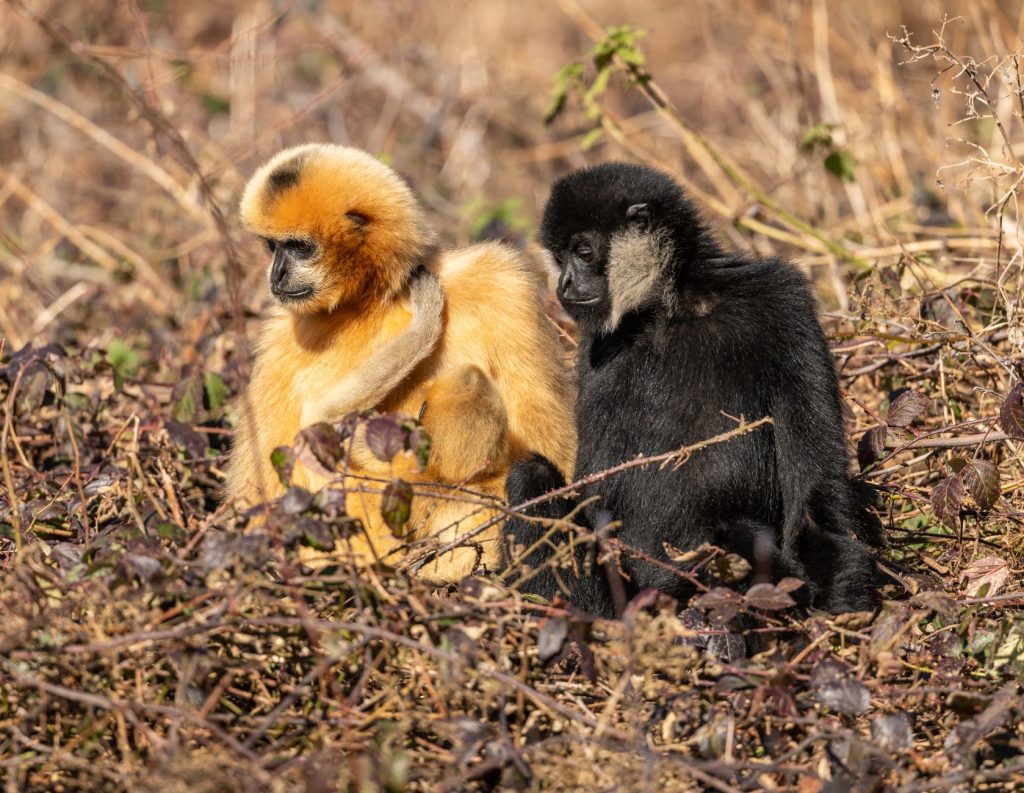
A video of a lar gibbon swinging from a train in Gujarat has gone viral on social media, and now the state’s Forest Department has announced an investigation into the incident. The video, which shows the agile primate effortlessly gliding from one train to another, has left many in awe and has sparked a heated debate about animal safety and welfare.
At the center of the controversy is Vikram, the 30-year-old man who is seen in the video feeding and interacting with the gibbon. While some have praised Vikram for his kindness towards the animal, others have criticized him for putting the gibbon’s life at risk by disturbing it on the train.
The Forest Department has launched an inquiry into the incident, and officials are examining footage from CCTV cameras at the train station where the video was shot. The department has also warned the public against interacting with or feeding wild animals, saying it can be detrimental to their health and well-being.
What Makes this Incident So Important?
The viral gibbon video has sparked a wider conversation about animal welfare and safety in India. With the country’s rapidly growing population and urbanization, there is an increasing risk of human-wildlife conflict, and incidents like this one highlight the need for greater awareness and education about how to coexist with wild animals.
Moreover, the video has also raised questions about the role of social media in spreading awareness about animal welfare issues. While social media platforms have been instrumental in bringing attention to this incident, they have also been criticized for sensationalizing and exploiting the story for the sake of clicks and views.
The Consequences of Interacting with Wild Animals
Interacting with wild animals can have serious consequences for both humans and animals. In this case, the gibbon may have been injured or even killed due to the stress and disturbance caused by Vikram’s actions. Additionally, feeding wild animals can also lead to dependence and habituation, making them more vulnerable to predators and human threats.
The Forest Department’s warning against interacting with or feeding wild animals is a timely reminder of the importance of respecting their space and allowing them to live in their natural habitats. By doing so, we can help prevent conflicts and ensure the long-term survival of these amazing creatures.
What’s Next for Vikram and the Gibbon?
The Forest Department’s investigation into the incident is ongoing, and Vikram may face consequences for his actions. While some have called for Vikram to be penalized for disturbing the gibbon, others have argued that he should be praised for his kindness towards the animal.
Meanwhile, the gibbon has been safely relocated to a wildlife sanctuary, where it will receive medical attention and care. The incident serves as a reminder of the importance of responsible wildlife tourism and the need for greater awareness about animal welfare issues in India.