
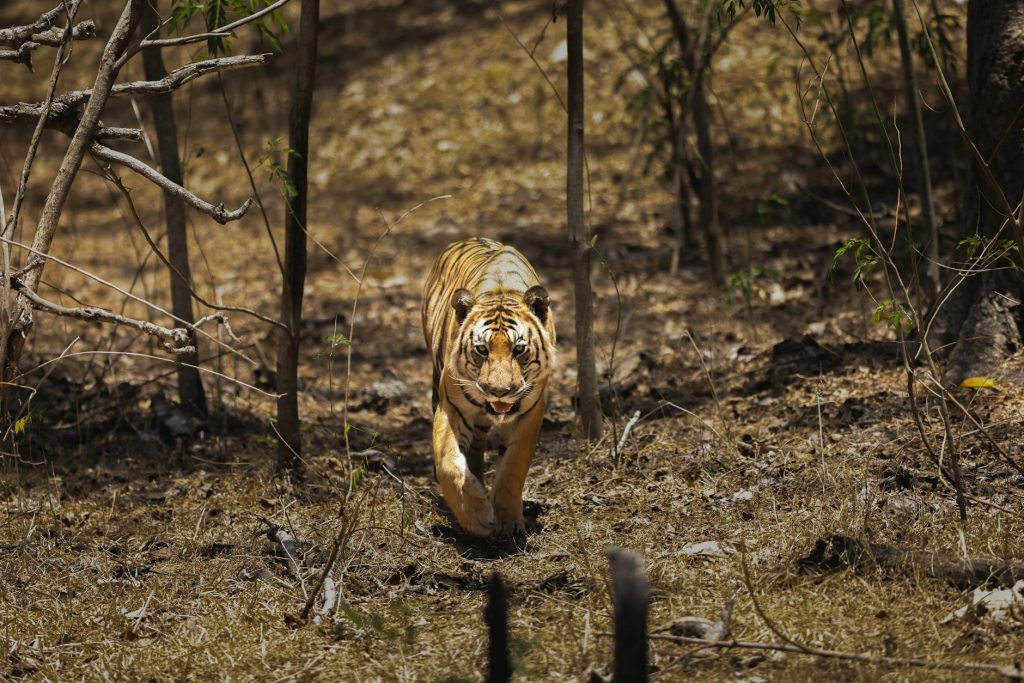
A sub-adult male tiger lost its life after being hit by a train near Nagpur in Maharashtra. The incident highlights the dangerous intersection between India’s railway network and wildlife corridors that crisscross the country.
The tiger, still in its younger years, was moving through an area where railway tracks cut through tiger habitat. Collisions like this aren’t rare—trains traveling at high speeds often can’t stop in time when animals wander onto the tracks at night or during dawn hours.
Why Tigers End Up on Railway Tracks
Tigers roam vast territories in search of food and mates. When their natural habitats shrink or get fragmented, they’re forced to move through human-dominated landscapes. Railway corridors sometimes become highways for these big cats, especially in central India where tiger populations are recovering.
The Nagpur region sits in a critical tiger zone. With multiple railway lines crisscrossing through forests, animals face constant danger. A single train journey can be fatal for creatures that don’t understand the speed and power of locomotives.
What This Means for India’s Tiger Conservation
India has worked hard to bring tiger numbers back from the brink. We’ve gone from around 1,400 tigers two decades ago to over 3,000 today. But incidents like this remind us that protecting tigers isn’t just about stopping poachers—it’s also about managing the infrastructure that cuts through their world.
Railway authorities and wildlife officials need better coordination. Installing warning systems, reducing speeds in tiger zones, and creating wildlife underpasses could prevent such tragedies. Some sections already have these measures, but coverage remains patchy.
For ordinary Indians, this matters more than it might seem. A healthy tiger population indicates healthy forests. Those forests provide clean water, regulate climate, and support biodiversity that benefits us all. When tigers disappear, entire ecosystems collapse.
The question now is whether we’ll learn from incidents like this one. Will authorities push for stronger protections along railway sections that pass through tiger habitats? Or will more big cats die before action kicks in?
India’s tigers are no longer an endangered species on paper—but they’re far from safe on the ground. Every death is a setback to years of conservation work.