
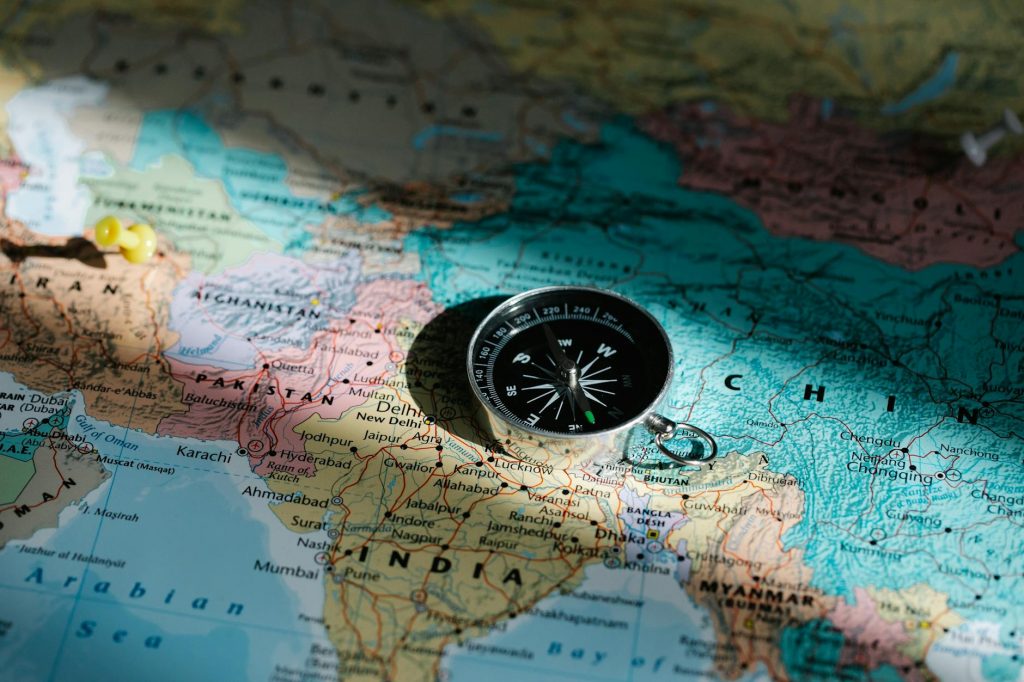
Nepal’s Encroached Territory: A Long-Standing Issue for India
Imagine waking up one morning to find your neighbor has built a fence across your boundary without your consent. Sounds unthinkable, right? For India and Nepal, this has been a reality for decades. The disputed border has been a source of tension between the two nations, with each side laying claim to a 3,650-kilometer stretch of land. The latest developments have reignited debates about the contentious issue.
The current dispute began in November 2022, when the Nepal government began constructing roads and bridges in the Kalapani area, a region claimed by India. The move was seen as an attempt to assert Nepal’s sovereignty over the disputed territory. The Indian government responded by reiterating its claims to the region and warning Nepal against any further encroachment. The situation escalated in March 2023, when India’s Ministry of Home Affairs issued a statement reaffirming its territorial claims and urging Nepal to respect the 1950 Indo-Nepal Treaty of Peace and Friendship.
The History Behind the Dispute
The India-Nepal border dispute is rooted in the country’s colonial past. When Nepal and British India signed the Sugauli Treaty in 1816, the border was demarcated, but it was never properly surveyed. As a result, the exact boundary was never clearly defined. Over the years, both countries have laid claims to the disputed territory, leading to sporadic border clashes. The issue gained international attention in 2015, when India and Nepal announced plans to demarcate the border, but the process stalled.
The current dispute is not just about geography; it’s also about national pride and sovereignty. For India, the disputed territory is a vital part of its northern border, which is home to several key military installations. For Nepal, the region represents a significant economic opportunity, with the potential for hydroelectric power generation and tourism. As the two nations continue to spar over the border, it’s clear that the dispute will be a long and contentious one.
Expert Context: What’s at Stake?
Dr. Kumar, a leading expert on Indian foreign policy, believes that the current dispute is a test of Nepal’s sovereignty. ‘India and Nepal have a long-standing relationship, but this dispute highlights the need for clear communication and cooperation between the two nations,’ Dr. Kumar said in an interview. ‘The issue is not just about the disputed territory; it’s about the principles of sovereignty and the rule of law.’ Dr. Kumar added that a resolution to the dispute would require a compromise between the two nations, one that respects their respective claims and territorial integrity.
As the situation continues to unfold, it’s clear that the India-Nepal border dispute will be a complex and contentious issue for years to come. The international community will be watching closely, as the two nations navigate this delicate situation. The stakes are high, and the outcome will have significant implications for regional stability and relations between India and Nepal.
The dispute also raises questions about the role of international law in resolving border disputes. The 1950 Indo-Nepal Treaty of Peace and Friendship provides a framework for resolving disputes, but it’s clear that more needs to be done to clarify the border and prevent future encroachments. As the two nations continue to negotiate, it’s essential that they prioritize cooperation, respect, and a commitment to the rule of law.