
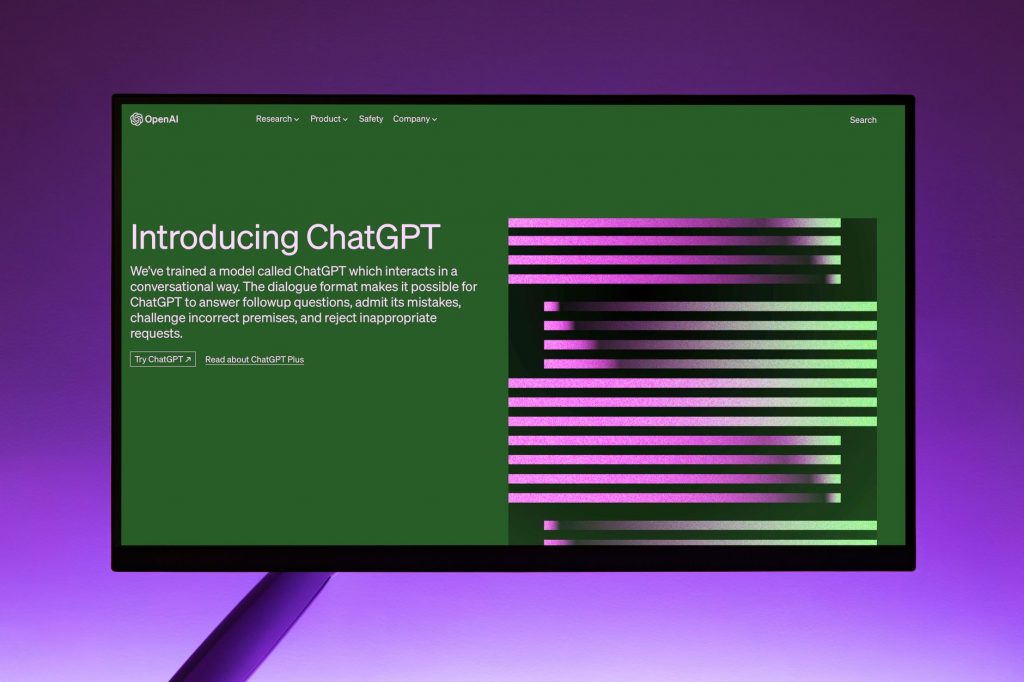
Imagine you’re chatting with a friend who can answer any question you have, from what’s the best place to visit in India to how to make a perfect cup of chai. This friend is not a human, but a computer program that can understand and respond to your questions in a very human-like way. This is what OpenAI’s ChatGPT can do, and it has taken the world by storm.
Now, the company behind this revolutionary technology has taken a major step towards becoming a publicly-traded company. OpenAI has filed paperwork to go public, which means it will soon be listed on a stock exchange and people can buy and sell its shares. This move comes just a week after its rival, Anthropic, took the same step.
What is OpenAI and how does it work?
OpenAI is a company that specializes in developing artificial intelligence technologies, including ChatGPT. ChatGPT is a type of AI called a large language model, which is trained on vast amounts of text data to learn how to generate human-like responses to a wide range of questions and prompts. This means that ChatGPT can understand and respond to natural language inputs, making it seem like you’re having a conversation with a real person.
But how does it work? Well, when you ask ChatGPT a question, it uses its vast knowledge base to generate a response. This knowledge base is built by training the model on huge amounts of text data, which can include books, articles, research papers, and even conversations. The more data the model is trained on, the more accurate and informative its responses become.
Why is OpenAI’s IPO significant?
OpenAI’s decision to go public is significant for several reasons. Firstly, it reflects the growing interest in artificial intelligence technologies and their potential to transform various aspects of our lives. As AI becomes more mainstream, companies like OpenAI are at the forefront of this revolution, and their success can have a ripple effect on the entire industry.
Secondly, OpenAI’s IPO can provide a much-needed boost to the Indian startup ecosystem. As a country, India has a thriving tech industry, and many Indian startups are working on AI-related projects. The success of OpenAI can inspire and motivate these startups to strive for greatness, and it can also attract more investment and talent to the sector.
Finally, OpenAI’s IPO can have significant implications for the future of work and education in India. As AI technologies become more advanced, they can automate many routine tasks, freeing up humans to focus on more creative and high-value work. This can lead to increased productivity and efficiency, but it also raises important questions about the future of employment and the need for workers to acquire new skills.
What’s next for OpenAI and the AI industry?
So, what’s next for OpenAI and the AI industry? As OpenAI becomes a publicly-traded company, it will face increased scrutiny and pressure to deliver results. The company will need to continue innovating and improving its technologies to stay ahead of the competition and meet the evolving needs of its customers.
At the same time, the AI industry as a whole will continue to evolve and expand. We can expect to see more companies working on AI-related projects, and more investment flowing into the sector. As AI becomes more mainstream, it will have a profound impact on various aspects of our lives, from healthcare and education to transportation and entertainment.
In conclusion, OpenAI’s decision to go public is a significant development that reflects the growing importance of artificial intelligence technologies in our lives. As the company continues to innovate and improve its technologies, it can have a profound impact on the future of work, education, and entertainment in India and beyond.