
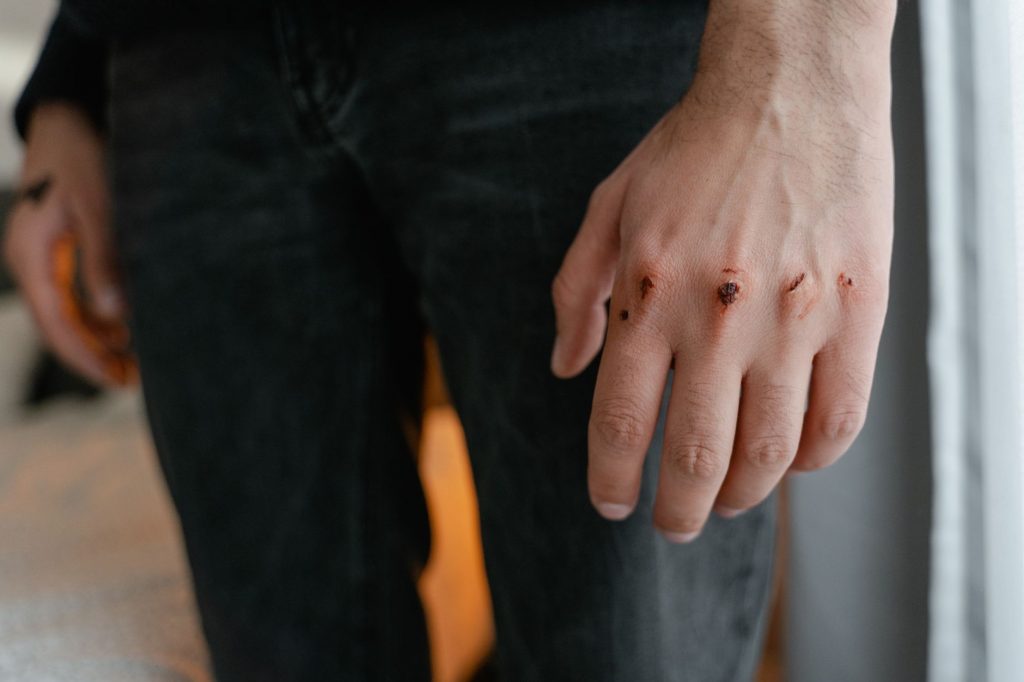
Violent clashes between Indian security forces and ‘cockroach’ protesters in Kashmir have left several victims with wounds eerily similar to those caused by pellet guns, according to medical experts.
These incidents have sparked a fresh wave of outrage and concern over the use of pellet guns, which have been a contentious issue in the region for years.
The wounds in question were described as resembling ‘multiple, small, entry and exit wounds’ by a doctor at a Srinagar hospital, who wished to remain anonymous. This pattern is consistent with the damage caused by pellet guns, which fire metal pellets that can cause severe injuries.
What Exactly Are Pellet Guns?
Pellet guns are a type of less-lethal weapon used by security forces to disperse crowds. They are designed to fire metal pellets that can cause significant pain and discomfort, but are not intended to be fatal.
However, the use of pellet guns has been widely criticized for causing serious injuries and even blindness, particularly in the eyes. In some cases, the wounds have been so severe that they have required multiple surgeries to repair.
The Indian government has defended the use of pellet guns, arguing that they are necessary to maintain law and order in the region. However, human rights groups have long argued that the use of pellet guns is disproportionate and excessive, and has resulted in unnecessary suffering for innocent civilians.
Why Does This Matter?
The latest incidents involving ‘cockroach’ protesters have raised fresh concerns about the use of pellet guns in Kashmir. The wounds on display have sparked outrage and calls for an immediate end to the use of these weapons.
As the situation in Kashmir continues to deteriorate, the use of pellet guns has become a major point of contention. Human rights groups are urging the Indian government to reconsider its policy on pellet guns, and to explore alternative methods for crowd control.
The government’s stance on pellet guns has been criticized by many, including the United Nations, which has called for a ban on the use of these weapons. The UN has argued that pellet guns are a disproportionate and excessive means of crowd control, and that they can cause serious harm to civilians.
What’s Next for Kashmir?
As the situation in Kashmir continues to unfold, it remains to be seen what the future holds for the region. The use of pellet guns is likely to remain a contentious issue, and will likely be a key point of discussion in the coming weeks and months.
The Indian government has vowed to take steps to address the concerns over pellet guns, but it remains to be seen what concrete actions will be taken.
In the meantime, human rights groups will continue to push for an end to the use of pellet guns, and for the government to explore alternative methods for crowd control.
The situation in Kashmir is complex and multifaceted, and will likely require a nuanced and multifaceted solution. However, one thing is clear: the use of pellet guns must be reconsidered, and alternative methods for crowd control must be explored.