
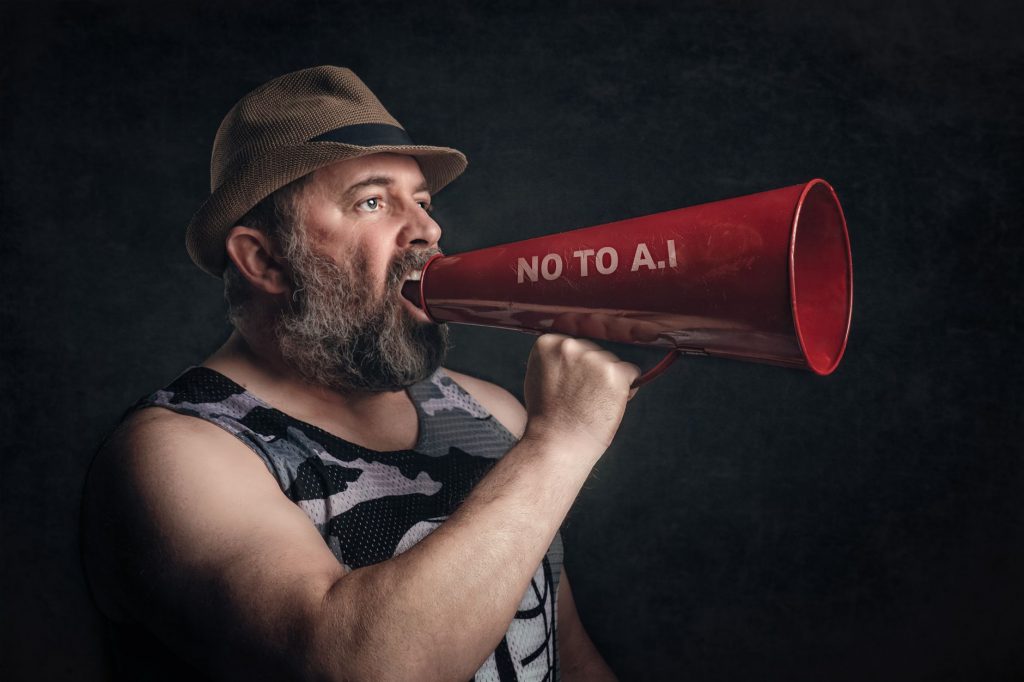
Tom Holland, the famous actor from Hollywood, has recently shared his thoughts on the impact of artificial intelligence on the entertainment industry. He believes that creativity is safe from AI because it lacks a soul. This statement has sparked a lot of interest and debate among people in the industry and beyond.
Holland’s statement is significant because it comes at a time when AI is increasingly being used in various aspects of the entertainment industry, from scriptwriting to video editing. Many people are worried that AI could replace human creatives, leading to job losses and a homogenization of content. However, Holland’s comments suggest that he is not too concerned about this possibility.
What is Artificial Intelligence?
Before we delve deeper into Holland’s statement, it’s essential to understand what artificial intelligence is and how it works. AI refers to the development of computer systems that can perform tasks that would typically require human intelligence, such as learning, problem-solving, and decision-making. AI systems use algorithms and data to make decisions and improve their performance over time.
In the context of the entertainment industry, AI can be used for a variety of tasks, such as generating music, creating special effects, and even writing scripts. While AI has the potential to revolutionize the industry, it also raises concerns about the role of human creatives and the potential for job losses.
The Limitations of AI
Holland’s statement that AI lacks a soul is an interesting one. What he means by this is that AI systems, no matter how advanced, lack the creativity, intuition, and emotional depth that human beings possess. While AI can process vast amounts of data and generate content, it lacks the ability to understand the nuances of human emotion and experience.
This is a crucial point, because it highlights the limitations of AI in the creative sphere. While AI can generate content, it is unlikely to be able to replicate the complexity, depth, and originality of human creativity. Human creatives bring a unique perspective, experience, and emotional resonance to their work, which is difficult to replicate with AI.
Furthermore, AI is only as good as the data it is trained on. If the data is biased, incomplete, or inaccurate, the AI system will reflect these limitations. This means that AI-generated content may lack the diversity, nuance, and complexity that human creatives can bring to a project.
What Happens Next?
So, what does the future hold for the entertainment industry in the age of AI? While AI is likely to continue to play a significant role in the industry, it’s unlikely to replace human creatives entirely. Instead, AI will likely augment and support human creativity, freeing up time and resources for more complex and creative tasks.
Holland’s statement is a reassuring one for human creatives, who may be worried about the impact of AI on their jobs. While AI may change the nature of work in the entertainment industry, it’s unlikely to replace the creativity, intuition, and emotional depth that human beings bring to a project.
In conclusion, Tom Holland’s statement that creativity is safe from AI because it lacks a soul is a thought-provoking one. While AI has the potential to revolutionize the entertainment industry, it’s unlikely to replace human creatives entirely. Instead, AI will likely augment and support human creativity, leading to new and innovative forms of content and storytelling.