
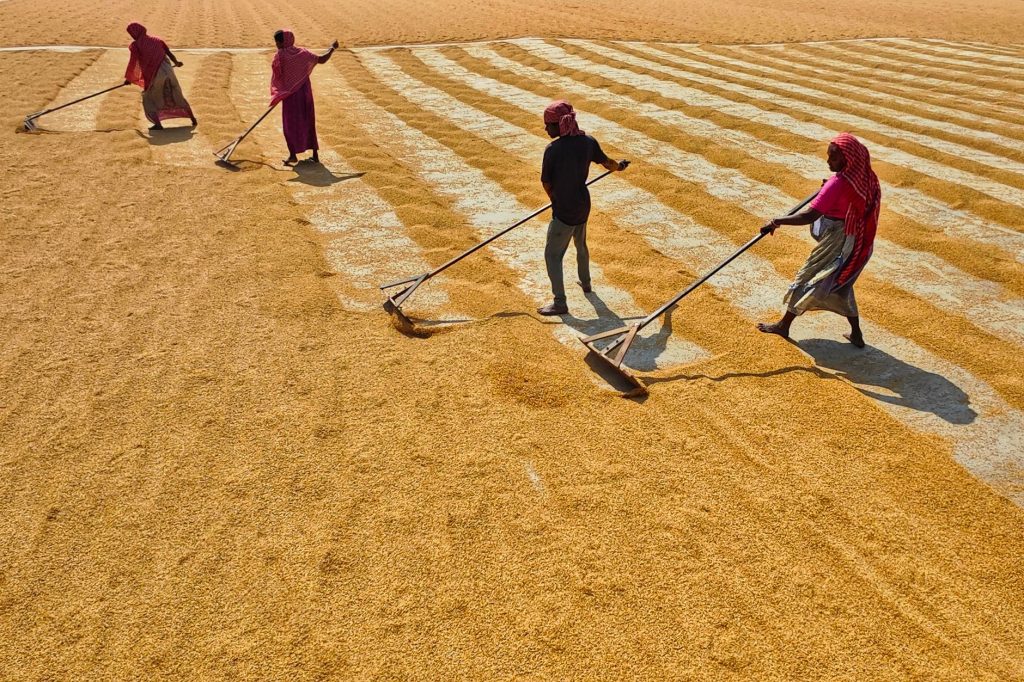
You wake up early in the morning to the sweet chirping of birds and the warm sun peeking through your window. As you step out of your house, you notice the lush green fields in front of you, where your mother and other women from your village are already busy tending to the crops. The sight is a familiar one for many Indians, especially those living in rural areas. Agriculture has been the backbone of India’s economy for centuries, and it’s a sector that heavily relies on women’s hard work and dedication.
The recent data released by the government highlights the crucial role women play in India’s agricultural sector. According to the statistics, women make up an impressive 59.8% of the country’s agricultural workforce. This means that out of every five people working in agriculture, four are women. This is a staggering number, and it’s a testament to the hard work and resilience of Indian women.
Women’s Contribution to Agriculture
Women’s role in agriculture is not limited to just tending to the crops. They are involved in various aspects of farming, including planting, harvesting, and post-harvest activities. From preparing the soil to ensuring the quality of the produce, women are the backbone of India’s agricultural sector. In fact, many women farmers are now taking up modern farming techniques, such as organic farming and vertical farming, to improve crop yields and quality.
One of the reasons why women are so integral to agriculture is that they have a deep understanding of the land and the crops. They have a keen eye for detail and are able to identify even the smallest changes in the soil and the plants. This knowledge is passed down from generation to generation, making women an essential part of India’s agricultural heritage.
Challenges Faced by Women Farmers
Despite their significant contribution to agriculture, women farmers in India face numerous challenges. One of the main hurdles is access to credit and markets. Many women farmers struggle to get loans from banks and other financial institutions, which makes it difficult for them to purchase seeds, fertilizers, and other essential inputs for farming. Additionally, they often have limited access to markets, which makes it hard for them to sell their produce at a fair price.
Another challenge faced by women farmers is the lack of recognition and respect. Many women are not given the same status as men in the farming community, and their contributions are often overlooked. This lack of recognition can be detrimental to women’s morale and motivation, which can ultimately affect their farming productivity.
Way Forward
The government’s recognition of women’s role in agriculture is a step in the right direction. However, more needs to be done to support women farmers and to address the challenges they face. One way to do this is to provide women farmers with access to credit and markets. This can be achieved by establishing women-focused agricultural cooperatives and credit schemes. Additionally, the government can provide training and capacity-building programs for women farmers, which will help them to adopt modern farming techniques and improve their farming productivity.
By supporting women farmers, we can not only improve their economic status but also ensure the sustainability of India’s agricultural sector. Women are the backbone of Indian agriculture, and it’s time we recognize their contribution and provide them with the support they deserve. As we move forward, it’s essential that we prioritize the needs of women farmers and work towards creating a more inclusive and equitable agricultural sector.